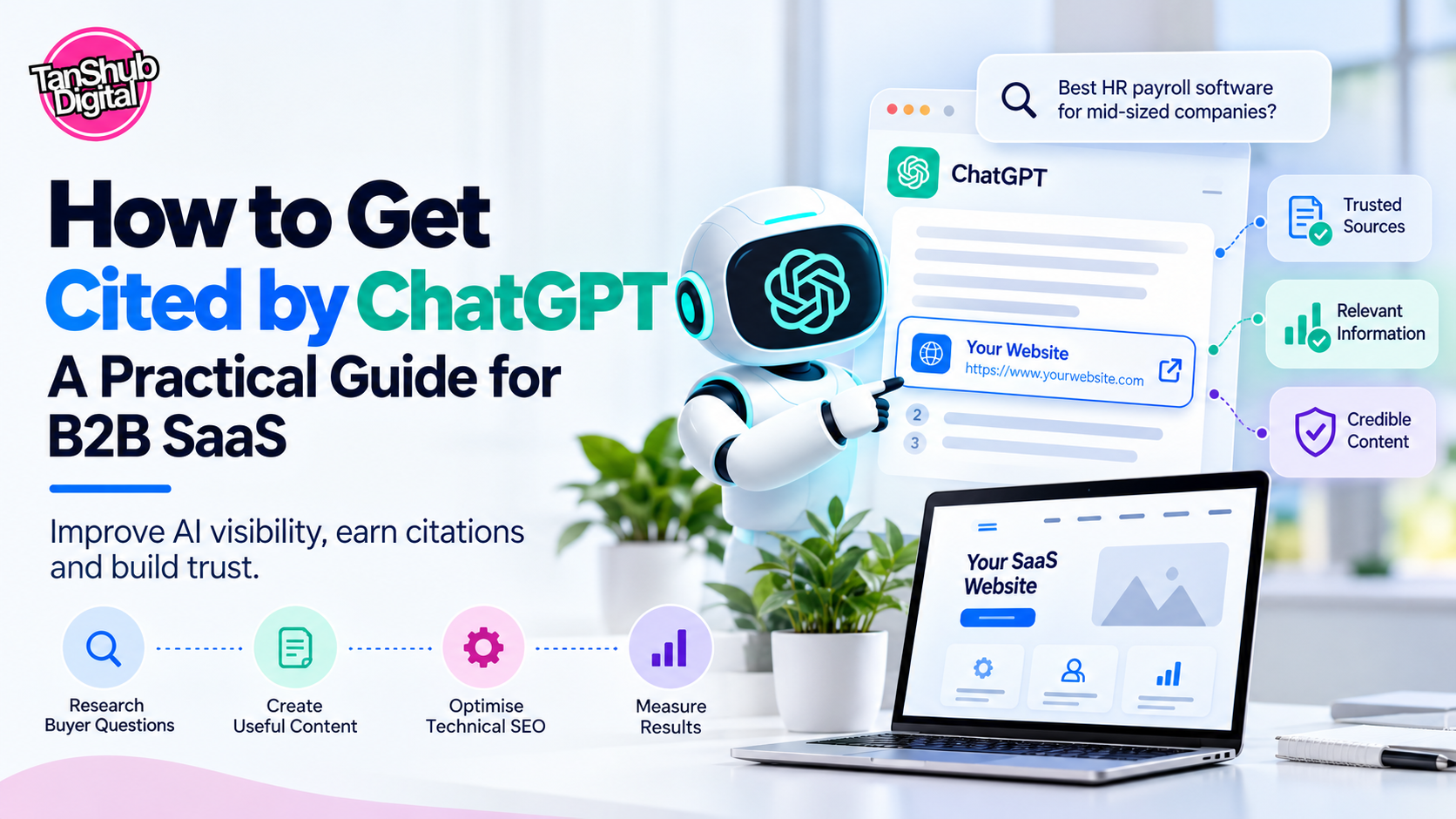
How to Get Cited by ChatGPT: A Practical Guide for B2B SaaS
When the entire search is swiftly shifting toward AI-powered answers, there are enough reasons for brands and businesses to focus on earning citations in AI-generated answers.
To get cited by ChatGPT, make your website and brand easy to discover, useful to retrieve, and credible enough to reference. Start by testing the questions your buyers ask, identify the sources that appear in relevant AI answers, improve your own pages, and build a trustworthy presence across the web. Then measure whether those changes improve visibility and business outcomes.
There is no guaranteed formula for earning a citation from ChatGPT. ChatGPT Search, Google’s AI search features, Perplexity and Gemini can return different sources for similar questions. The practical goal is to improve your eligibility, relevance and credibility, while making it easier to understand what is working about How to Get Cited by ChatGPT.
This guide gives B2B SaaS teams a repeatable process for researching buyer prompts, auditing source visibility, improving content, checking technical access, and measuring results. This guide shows How to Get Cited by ChatGPT is achievable by following the steps.
What Does Getting Cited by ChatGPT Mean?
A linked ChatGPT citation is a source link shown with an answer that leads readers to supporting information. A brand mention without a link is a different outcome. A recommendation is different again: the answer may present a product as a suitable option for a particular need, compare it with competitors or leave it out.
Track these outcomes separately:
- Brand mention: your company or product is named in an answer.
- Linked citation: the answer links to your website or a relevant page about your brand.
- Recommendation: the answer positions your product as an option for a defined use case.
- Referral visit: a user clicks from an AI platform to your website.
- Business outcome: a visit contributes to a qualified lead, trial, demo request or sale.
These metrics represent different stages of discovery. A mention does not guarantee a click, and a citation does not automatically create a pipeline. Keeping the measures separate helps teams avoid overstating the commercial value of AI visibility.
How ChatGPT Search Discovers and Cites Web Pages
ChatGPT can use web search to retrieve current online sources and display citations. OpenAI says search placement is not guaranteed. To make a website eligible for inclusion, site owners should allow OAI-SearchBot to crawl relevant pages and ensure that their host or content delivery network does not block the crawler’s published IP addresses.
OAI-SearchBot and GPTBot serve different documented purposes. OAI-SearchBot is associated with surfacing websites in ChatGPT Search, while GPTBot relates to content that may be used to improve generative AI foundation models. Review the current documentation before changing crawler access, and make decisions that fit your organization’s policies.
Google’s guidance is also important: its AI search features build on established Search fundamentals. Google’s May 2026 guidance emphasizes valuable, unique content and explains why SEO best practices remain foundational. Do not treat GEO as a replacement for technical SEO, useful content or audience research.
Official Documentation and References:
- OpenAI Help Center: Searching the Web with ChatGPT
- OpenAI: Overview of OpenAI Crawlers
- Google Search Central: Optimizing for Generative AI Features
- Google Search Central: AI Features and Your Website
How to Get Cited by ChatGPT: Seven Practical Steps
1. Start with Real Buyer Questions, Not Just Keywords
Build your prompt list around the decisions buyers need to make. For B2B SaaS, that often includes category discovery, product comparisons, alternatives, integrations, implementation, security, pricing and return on investment.
Collect question language from sales calls, customer interviews, support tickets, CRM objections, site-search data, review sites and Google Search Console. Cluster the questions by intent instead of treating every wording variation as a separate content opportunity.
- Category discovery: “Which tools help a mid-market company automate payroll?”
- Comparison: “How does Product A compare with Product B for a 200-person business?”
- Alternatives: “What are alternatives to Product A for teams with a limited budget?”
- Implementation: “What should we check before migrating from a legacy HR system?”
- Risk and validation: “Which security controls should I verify before buying HR software?”
Prioritize prompts that influence a real decision. A low-volume question that repeatedly appears in lost deals may be more commercially valuable than a broad, high-volume term with little buying intent.
2. Establish a Repeatable AI Visibility Baseline
Start with 20 to 50 well-chosen prompts. Run them on the platforms relevant to your audience and record the date, exact prompt, platform, brand mention, linked citation, cited URL and competitors shown. Repeat tests where practical because responses can vary between sessions.
Keep the wording consistent when comparing results over time. If you change a prompt, record the change rather than treating it as a directly comparable observation. Also record the platform and test date, because AI products and their retrieval behavior evolve.
Use the companion AI Citation Audit Workbook to log prompts and results. It includes a prompt inventory, citation log, metric definitions and a monthly summary structure. The workbook is a measurement aid, not an automated connection to AI platforms.
A useful baseline answers four questions: Where does the brand appear? Which pages are cited? Which competitors appear instead? Which sources repeatedly influence answers for commercially important prompts?
3. Analyze the Sources Appearing in AI Answers
For each priority prompt, inspect the cited pages rather than simply counting the brands mentioned. Look for recurring review platforms, specialist publications, comparison pages, technical documentation, independent research and professional communities.
Create a source-gap list. Ask whether the source mentions your brand accurately, what evidence it uses, and whether you can add something genuinely useful. Possible actions include improving your own documentation, supplying a factual correction, publishing original data, contributing expert commentary or pitching an editorial resource that fits the publication.
Do not spam communities, manufacture reviews or buy undisclosed endorsements. Participate where your expertise is relevant, disclose affiliations and follow community rules. A useful contribution should help the audience even if it produces no link.
Worked Example: Diagnose a Citation Gap
The following is an illustrative scenario, not a report of a real test or a claim about any specific AI platform. It shows how a SaaS team can turn an observed citation gap into a testable action plan.
Scenario
A payroll software company tests this buyer prompt: “Which payroll platforms suit a 200-person Indian business that needs statutory payroll compliance and accounting integrations?” In the responses reviewed, the company is absent while competitor pages and independent comparison resources appear. One observation is not enough to establish a pattern, so the team checks the same prompt across several relevant platforms and repeats the test on a later date.
Diagnose the Gap
First, open the cited pages and record what they provide. Do they explain the needs of a 200-person Indian business? Do they describe relevant payroll workflows, supported accounting integrations, implementation requirements and the limits of each product? Do independent sources describe the company accurately? Check the company’s own pages for missing information, unclear claims, outdated details or access problems. Treat each explanation as a hypothesis until the evidence supports it.
Choose an Action Based on the Evidence
• If the product page does not clearly explain the target use case, improve it with specific, verifiable capability details and implementation considerations.
• If the information exists but is difficult to find, improve headings, page structure and relevant internal links.
• If credible third-party sources repeatedly appear and omit the company, prioritize accurate product information and relevant editorial outreach. Do not buy reviews or demand inclusion.
• If the relevant pages are blocked, non-indexable or returning errors, fix the technical issue before producing more content.
Measure the Result
Record the original prompt, platform, date, cited URLs, brand mentions and competitors. Make one clearly documented change at a time where practical, then rerun the same prompt set under comparable conditions. Report what changed without claiming that the change caused the outcome unless the test design supports that conclusion.
This process is more useful than publishing another generic article because it connects a specific buyer question to observed sources, an evidence-based diagnosis and a measurable next step.
4. Build Credible Third-Party Presence
Your own website is only one part of your brand’s public footprint. Keep relevant software directories, review profiles and company listings accurate. Describe supported integrations, target users, deployment options, pricing approach, security controls and product limitations consistently.
Prioritize platforms that buyers use and that your prompt research shows in relevant citations. Depending on the category, these may include software review sites, specialist publications, industry associations, independent comparison pages and technical communities. There is no universal platform checklist that every SaaS company must follow.
When pitching an editor, bring something that improves the resource: verified product details, a current demonstration, a useful benchmark, original data or a clear expert explanation. Relevance and evidence are stronger reasons for inclusion than a request for a link.
Review platforms can support buyer confidence, but do not assume that a profile or review automatically causes a ChatGPT citation. Treat third-party work as a way to improve discoverability, information accuracy and credibility, then test its impact.
5. Make Your Pages Easy to Understand, Quote and Verify
Answer the page’s main question directly near the beginning, then support the answer with context, examples, evidence and limitations. This improves usability, but it is not a guaranteed citation formula.
Use descriptive headings, concise paragraphs, clear definitions and tables when they help readers compare options. Explain acronyms on first use. Identify who a claim applies to, and distinguish documented facts from opinions or recommendations.
For product pages, provide accurate information about features, integrations, intended users, deployment, security and pricing where appropriate. For educational content, cite primary documentation and original research. Avoid calling a product “the best” unless you define the criteria and show evidence.
For example, instead of saying “choose the best payroll software,” explain what a specific buyer should evaluate:
“For a 200-person company replacing manual payroll spreadsheets, shortlist platforms that support the company’s statutory requirements, accounting integrations, approval workflows and audit logs. Verify each capability in current product documentation and test it during a demo. The right choice depends on compliance needs, existing systems and implementation budget.”
This example is useful because it gives the reader decision criteria, a concrete scenario and a way to verify claims. It does not make an unsupported universal recommendation.
6. Audit Crawler Access and Technical SEO
Before creating more content, confirm that important pages can be discovered and accessed. Technical issues can undermine otherwise useful content.
- Robots.text: check whether relevant search crawlers are unintentionally disallowed.
- CDN and firewall: verify that bot-protection rules do not block legitimate crawler traffic.
- HTTP status: confirm that priority URLs return the expected successful response rather than an error or redirect chain.
- Indexability: check for accidental noindex directives and other restrictions.
- Canonical tags: make sure the preferred URL is consistent and not contradicted by other signals.
- Sitemap and internal links: include important canonical URLs in the XML sitemap and link to them from relevant pages.
- Rendered content: ensure that the main copy and key information are available as readable text.
- Structured data: validate markup, ensure it matches visible content and follow the relevant search engine guidelines.
For ChatGPT Search, consult OpenAI’s current OAI-SearchBot documentation and confirm that the website host or CDN allows the documented crawler traffic. Crawler access makes a page eligible for retrieval; it does not guarantee that the page will be selected or cited.
For Google AI search features, follow Google’s published guidance and foundational SEO practices. Do not add special markup or machine-readable files solely because a vendor claims they are required for AI visibility. Verify any proposed technical change against current platform documentation.
7. Keep Information Current and Measure the Impact
Review information that changes, such as pricing, product features, integrations, regulations and market statistics. Update a page when there is a meaningful change, and show publication or update dates where appropriate. Do not change dates just to make old content look fresh.
Repeat the same prompt set on a defined schedule, such as monthly. Compare results by platform and intent. Record brand mentions, linked citations, cited URLs and competitor presence, then connect these observations to identifiable referral sessions and conversions where analytics data permits.
Attribution has limits. A buyer may see a brand in an AI answer and later return through a search engine, direct visit or another channel. Report observed AI referrals separately from assisted or inferred influence, and avoid claiming that every later conversion was caused by AI search.
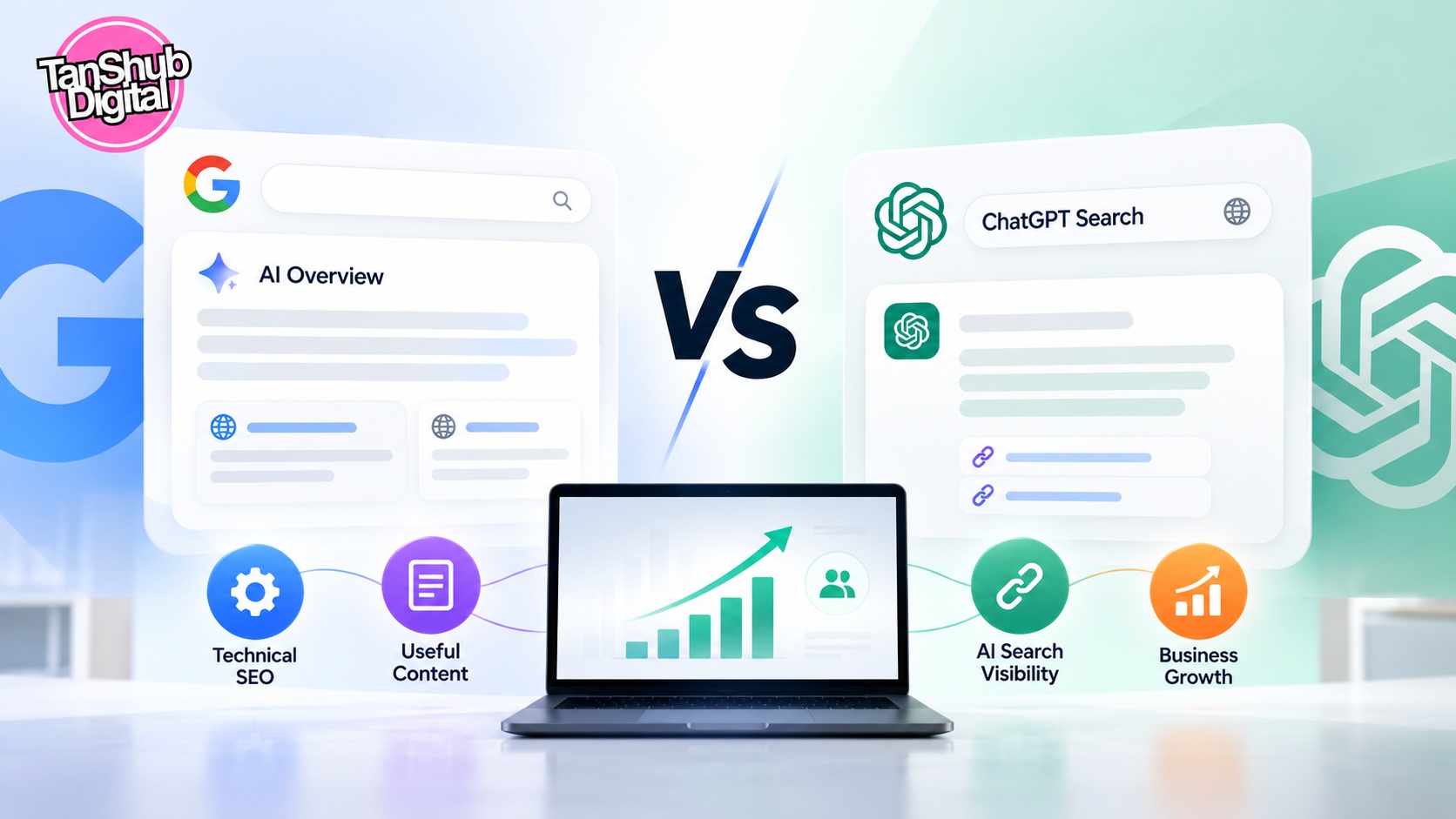
ChatGPT vs Google AI Search vs Perplexity vs Gemini
These products should not be treated as one search engine. Their retrieval systems, source presentation and reporting options differ. The table below gives a practical starting point, not a claim about a fixed or fully documented ranking formula.
| Platform | What to examine | Practical starting point |
| ChatGPT Search | Whether OAI-SearchBot can access the site and which pages appear for priority prompts. | Check crawler access and run a consistent prompt set. |
| Google AI Overviews and AI Mode | Google indexing eligibility, Search Console performance and the quality of the page for the query. | Apply foundational SEO and add original, useful information. |
| Perplexity | Which sources are cited for target prompts and whether the information is accurate and relevant. | Publish verifiable information and inspect the actual cited sources. |
| Gemini | Which sources appear for target prompts and whether brand information is consistent across the web. | Maintain accurate product information and useful, accessible pages. |
How to Measure AI Visibility and Business Impact
Measurement rule: define a valid observation before testing, preserve the exact prompt and platform, and report each platform separately. A change in the prompt set, sample size or testing conditions can change the percentages even when underlying visibility has not changed.
A useful reporting program separates visibility, referral traffic and business outcomes. Define each metric before testing and keep the denominator consistent across reporting periods.
1. Brand Mention Rate
Formula: observations containing a brand mention ÷ total valid observations × 100.
If the brand appears in 18 of 40 valid observations, the observed mention rate is 45% for that test set. This is not universal market share. It describes only the prompts, platforms, dates and testing conditions used.
2. Linked Citation Rate
Formula: observations containing at least one qualifying link to your website ÷ total valid observations × 100.
Define a qualifying citation in advance. Record the destination URL and decide whether homepage, product-page and blog citations will be reported together or separately.
3. Competitor Mention Rate
Formula: observations mentioning a named competitor ÷ total valid observations × 100.
Compare competitors by prompt category. One company may appear frequently in “best tools” prompts but rarely in implementation or compliance prompts. A single combined figure can conceal these differences.
4. AI Referral Conversion Rate
Formula: conversions attributed to identifiable AI referral sessions ÷ identifiable AI referral sessions × 100.
Use your analytics platform to review identifiable referrals, landing pages, engaged sessions, demo requests, trials and qualified leads. This metric does not capture every AI-influenced journey, so do not interpret it as a complete measure of AI impact.
5. Compare Platforms Fairly
If you test 40 prompts on four platforms, you have 160 platform-prompt observations before any repeated tests. Report each platform separately as well as any combined result. Do not compare a 20-prompt test from one month with a 50-prompt test from another without explaining the difference.
Record the test date, exact prompt, platform, whether the response used web search when that information is available, the brand and competitors mentioned, the cited URLs and the next action. This makes the audit more repeatable and easier to interpret.
What Research Says About Generative Engine Optimization
The 2024 paper “GEO: Generative Engine Optimization,” published in the proceedings of ACM SIGKDD, evaluated optimization methods on a research benchmark and reported visibility improvements of up to 40% for some methods. This is evidence that content presentation can affect visibility in the tested setting. It is not a promise that a commercial website will gain 40%, and it does not establish a universal ChatGPT citation formula.
Third-party studies can help generate hypotheses, but their findings depend on the dataset, query set, engine and measurement method. Before using a numerical finding, identify the original study, explain what was measured and preserve its limitations. Do not turn a benchmark result into a general forecast.
For your own program, the most defensible evidence is a documented baseline, a clearly described set of changes and repeated measurements using a consistent method.
What Recent Research Reveals About ChatGPT Citations
Research published in 2025 and 2026 suggests that getting cited by AI search engines is more complex than simply optimizing a webpage for keywords or adding structured data.
A 2026 critical survey, Optimizing Visibility in Generative Engines: A Critical Survey of Generative Engine Optimization (2023–2026), reviewed 45 studies examining generative engine optimization. It distinguishes several stages of AI visibility, including discoverability, retrieval, citation, information absorption and user behavior. Importantly, improving a page’s chances of being cited after retrieval does not necessarily increase its chances of being discovered in the first place.
Research also highlights the importance of examining how AI search systems select and present sources. A 2026 study on citation behavior in Google AI Overviews investigated citation patterns in relation to document authorship and retrieval rank. This reinforces the need to examine actual citation patterns rather than assume that conventional search rankings alone explain which sources appear in AI-generated answers.
Meanwhile, a 2025 study on news source citation patterns across AI search systems analyzed more than 24,000 conversations across AI search systems from OpenAI, Perplexity and Google. The researchers found that citations to news sources were concentrated among a relatively small number of outlets. Although this finding applies to news sources rather than B2B SaaS websites, it illustrates why source selection and third-party credibility deserve further investigation.
These findings point to a practical conclusion: GEO should be treated as a measurable research and optimization process, not a guaranteed formula. SaaS teams should test relevant buyer prompts, inspect the pages and external sources cited by AI platforms, improve the evidence and usefulness of their content, and repeat measurements under comparable conditions.
However, the available evidence does not establish one technique that consistently improves organic discoverability, citations and conversions across every AI search platform. Results should therefore be evaluated using platform-specific observations and clearly defined metrics.
How Long Does It Take to Get Cited by ChatGPT?
There is no dependable universal timeline. A page may become discoverable relatively quickly, while building relevant third-party coverage, earning editorial mentions and improving brand awareness can take longer. Outcomes depend on the topic, competition, page accessibility, source landscape and platform behavior.
Set a baseline, document changes and review results on a defined cadence. Monthly reporting is a practical starting point for many teams, but it is a monitoring interval, not a promise that visibility will improve within a month.
Common Mistakes That Limit AI Search Visibility
- Blocking relevant crawlers unintentionally through robots.text, CDN or firewall rules.
- Assuming that schema markup alone will produce AI citations.
- Repeating generic advice without original evidence, examples or useful first-hand expertise.
- Treating one AI response as a stable ranking or drawing broad conclusions from too few prompts.
- Buying fake reviews, spamming communities or pursuing undisclosed paid placements.
- Publishing unsupported statistics, outdated product details or claims without primary sources.
- Creating near-identical pages for minor keyword variations instead of satisfying distinct user needs.
- Reporting brand mentions as if they were visits, leads or revenue.
- Assuming the same tactic works identically across ChatGPT, Google AI search, Perplexity and Gemini.
- Changing publication dates without making meaningful updates.
Frequently Asked Questions
How do I get my SaaS company cited by ChatGPT?
Identify buyer prompts, test which sources appear, confirm your pages are accessible and useful, and improve your presence on credible third-party sources. Track brand mentions and linked citations separately, then repeat the test over time.
Is ChatGPT SEO different from Google SEO?
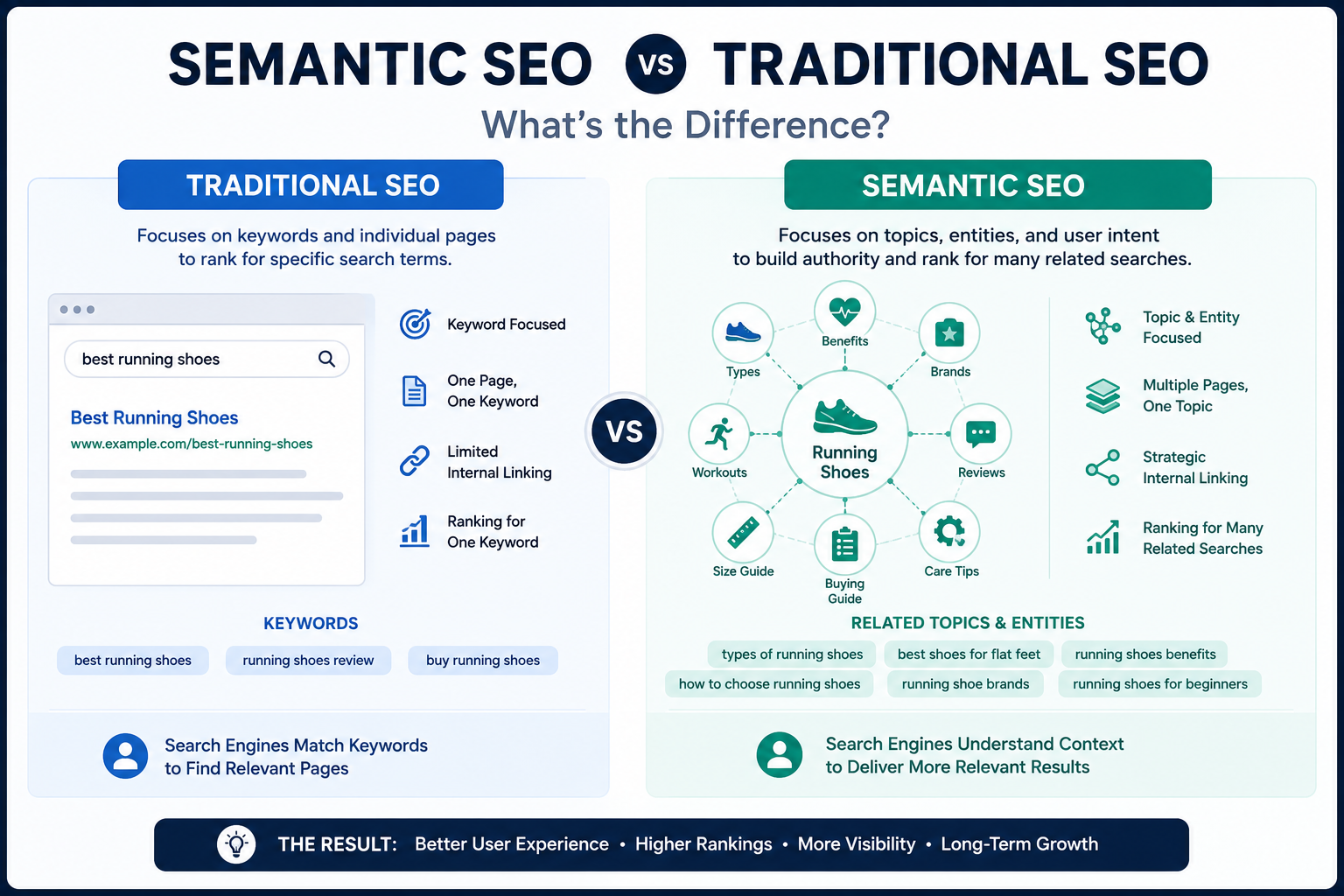
They share fundamentals such as accessibility, useful content and credibility, but their retrieval and source-selection systems differ. Google AI features build on Google Search, while ChatGPT Search has its own process. Measure each experience separately.
Does schema markup help with ChatGPT citations?
Structured data can help supported search systems interpret eligible pages when implemented correctly, but it is not a guaranteed way to earn ChatGPT citations. Use markup that matches visible content and follow current platform guidance.
Should I allow OAI-SearchBot and GPTBot?
They have different documented purposes. OAI-SearchBot is associated with surfacing websites in ChatGPT Search, while GPTBot relates to content that may be used to improve generative AI foundation models. Review the current documentation and your organization’s policies before deciding.
Can anyone guarantee a ChatGPT citation?
No. Website owners can improve accessibility, relevance and credibility, but they cannot control whether a platform selects a page for a particular answer. Treat guarantees of specific placements with caution.
How do I track ChatGPT citations?
Use a fixed prompt set, record responses and cited URLs, and repeat tests on a regular schedule. Combine the results with analytics for identifiable AI referrals and conversions. Record the platform, date and methodology.
Does publishing more content increase AI citations?
Not automatically. Publish content when it satisfies a distinct need and adds useful information. A smaller set of accurate, original and well-supported pages can be more valuable than many repetitive pages.
How many prompts should I test?
A starting set of 20 to 50 prompts can help a team build a baseline. The right number depends on the size of the category and the decisions you need to support. Keep the prompt set and method consistent when measuring change.
Turn AI Visibility into an Actionable Plan
If your team is unsure why competitors appear in AI answers while your brand does not, start with a structured audit rather than publishing more content at random. A useful audit should show which buyer prompts matter, which sources appear, whether your key pages are technically accessible, and which improvements deserve priority.
A practical AI visibility audit should include:
- A documented set of buyer prompts grouped by intent.
- A platform-by-platform baseline of brand mentions and linked citations.
- A review of cited competitor pages and recurring third-party sources.
- A technical check of crawler access, indexability and key page signals.
- A prioritized action plan with measurement criteria for the next review.
Need to understand why your brand is missing from AI-generated answers? Request an AI visibility audit to identify priority buyer prompts, citation gaps, technical blockers and the improvements most worth testing.
Conclusion: Build Visibility Through Evidence and Usefulness
Getting cited by ChatGPT is not a one-time optimization trick. It requires accessible pages, clear and verifiable information, a credible public presence and a consistent way to test what AI systems surface for relevant buyer questions.
Begin with a prompt baseline and a technical audit. Improve the pages and third-party sources that matter most, then measure brand mentions, linked citations, referral traffic and business outcomes separately. The goal is not to chase a guaranteed placement. It is to build a defensible process for earning visibility and learning which changes help.
If you need a structured starting point, use the accompanying AI Citation Audit Workbook to organize prompts, log citations and prioritize follow-up actions.
Want Your B2B SaaS Brand to Get Cited by ChatGPT?
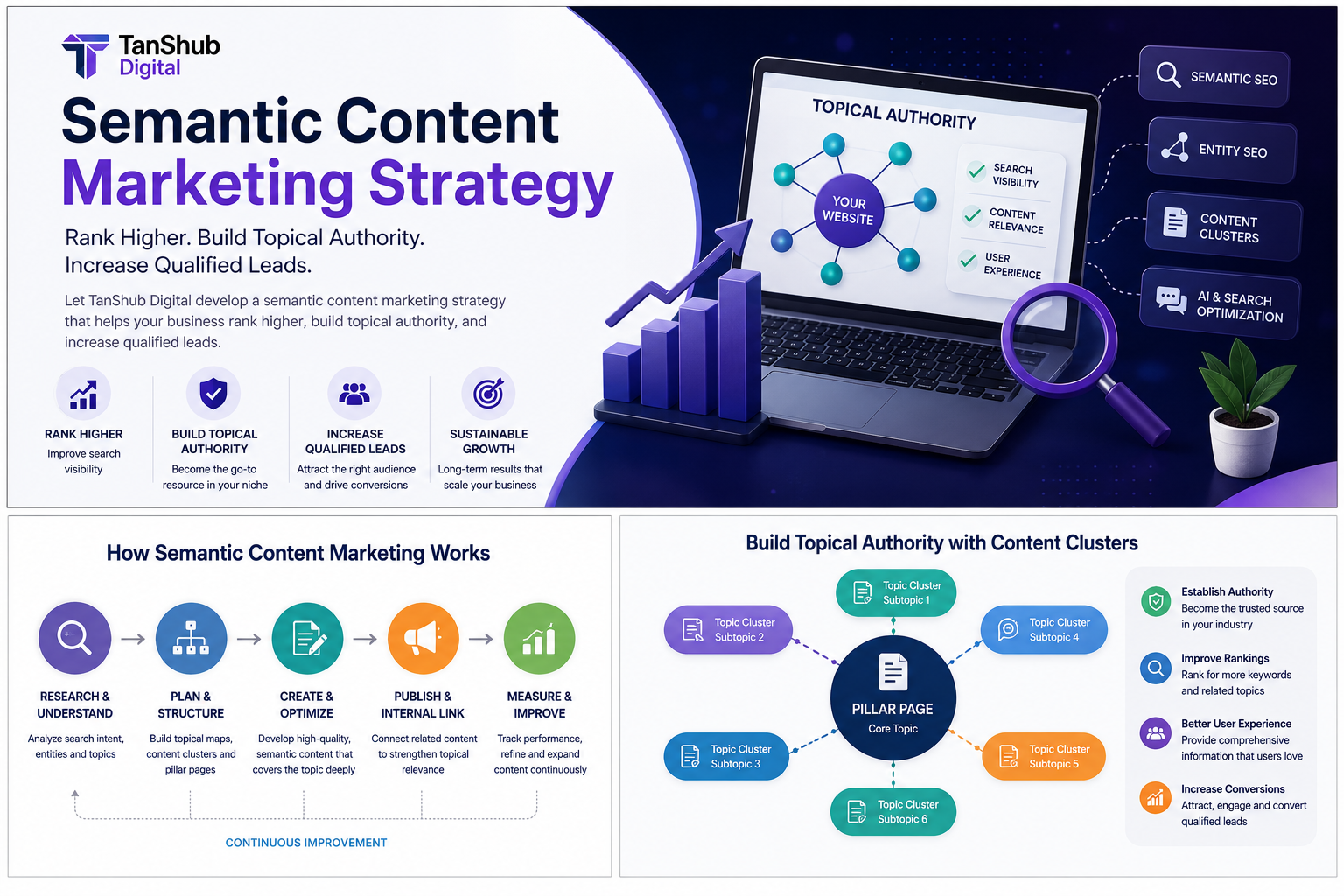
Improve your brand’s visibility across AI-powered search experiences with strategic content, semantic SEO, and AI search optimization. Build a stronger digital presence that helps AI platforms discover, understand, and reference your expertise.