Introduction
For years, SEO revolved around a relatively simple equation:
Keyword → Search Query → Web Page → Ranking
A business identified a keyword, created a page around it, optimized the content and attempted to rank in Google’s search results.
That model still matters.
However, search behavior is becoming considerably more complex.
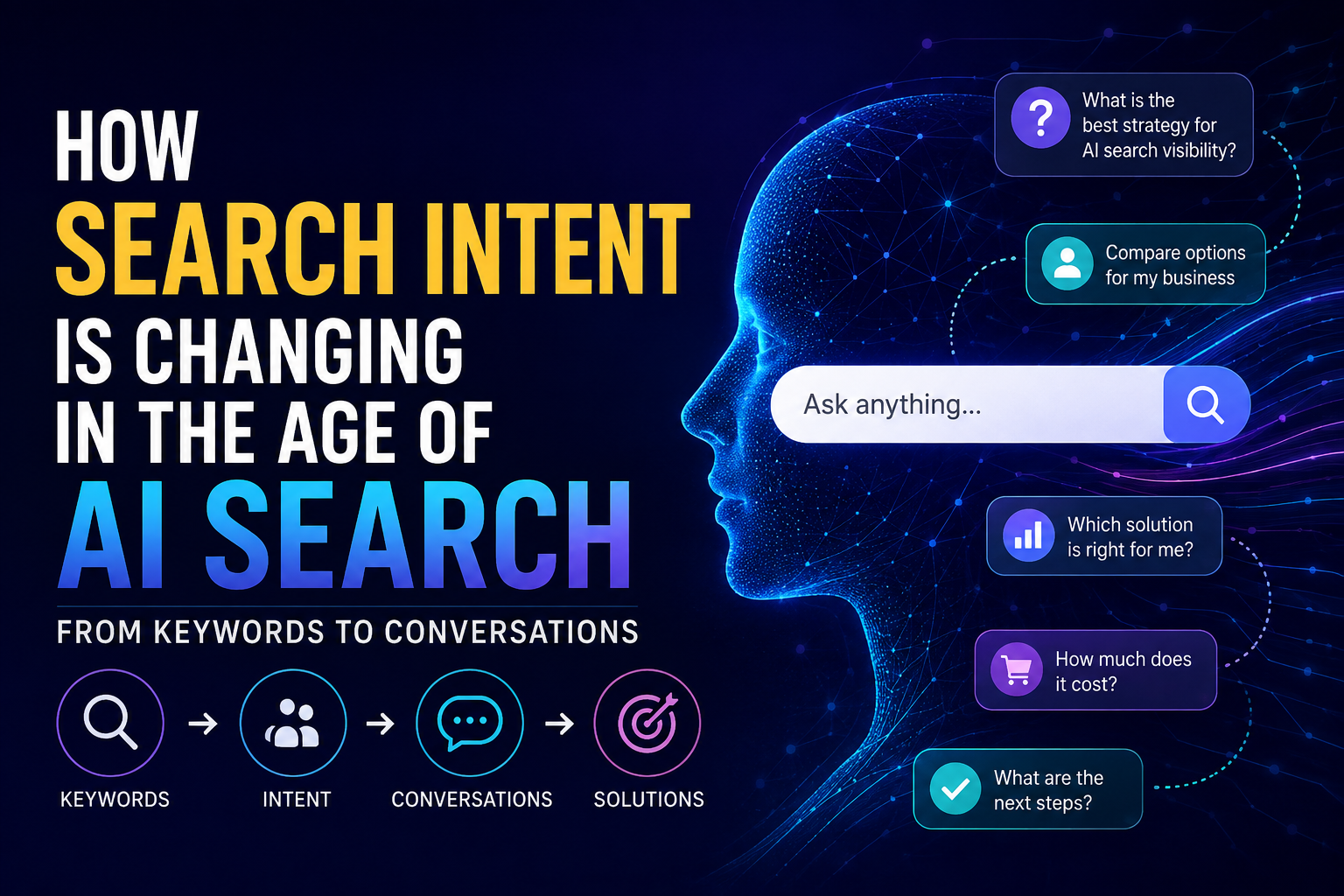
People increasingly use search engines and AI-powered interfaces to ask longer questions, describe situations, compare alternatives and continue conversations instead of entering short keyword phrases.
Google’s current documentation describes AI Mode as particularly useful for nuanced questions, exploration and complex comparisons. Google also says its AI features can use a technique called query fan-out, where an initial query is expanded into multiple related searches across subtopics and sources.
This changes an important part of SEO:
The objective is no longer simply to match a page to a keyword. It is to understand the underlying intent, context and information need behind the search.
That is why search intent is becoming increasingly important in the age of AI search.
What Is Search Intent?
Search intent is the underlying reason why someone performs a search.
A person searching for:
“what is semantic SEO”
is probably looking for an explanation.
Someone searching for:
“semantic SEO agency”
is potentially looking for a service provider.
Someone searching for:
“semantic SEO vs traditional SEO”
is comparing approaches.
The words are related, but the intent is different.
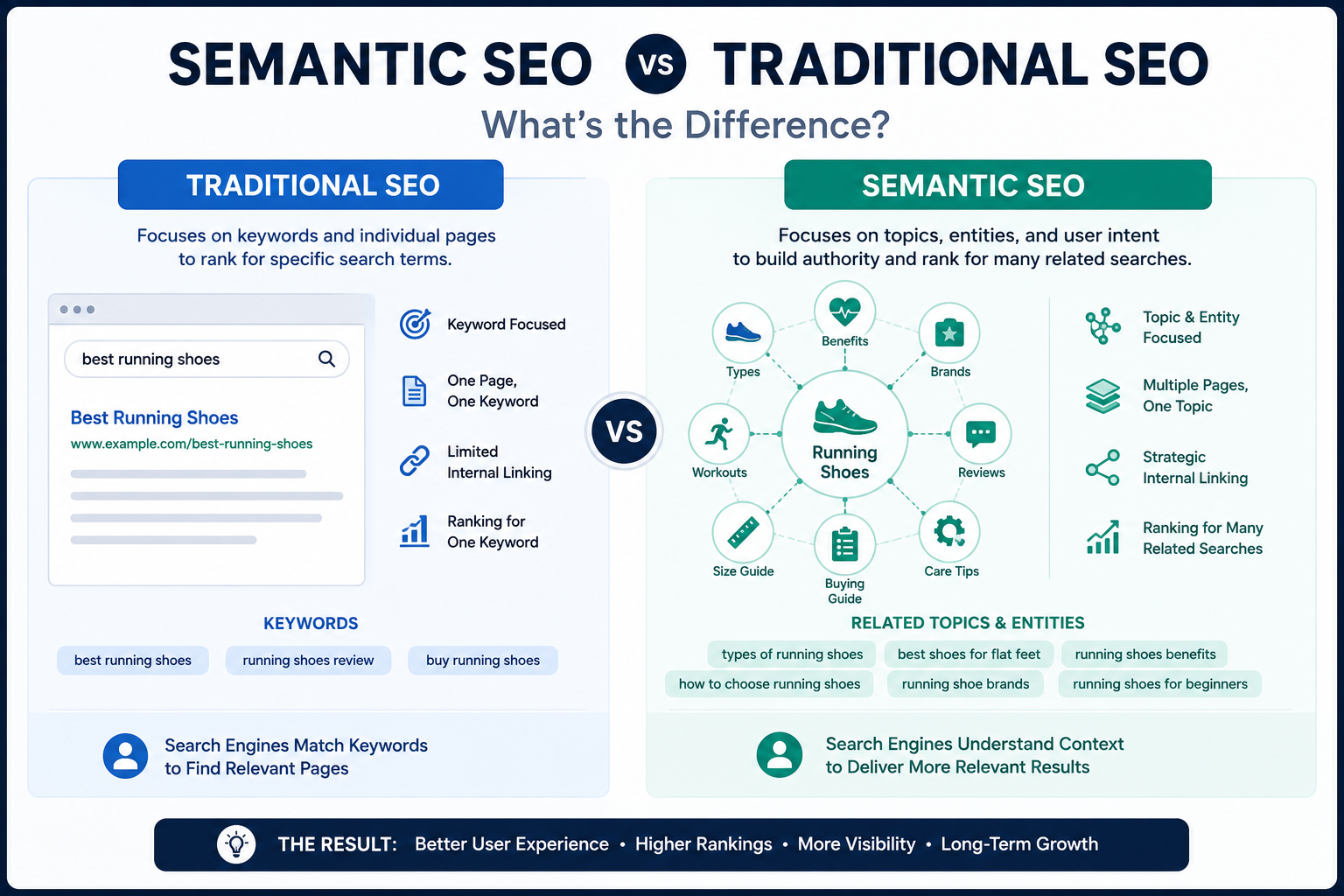
Traditional SEO often treats these queries as separate keyword opportunities.
A stronger approach looks at the relationship between the queries and the user’s journey.
The user may be moving through several stages:
Understand → Explore → Compare → Evaluate → Decide → Act
AI search makes this journey even more conversational.
Why Search Intent Is Becoming More Important
The rise of AI search does not make traditional SEO irrelevant.
In fact, Google explicitly states that the foundational SEO practices used for traditional Search continue to apply to AI features such as AI Overviews and AI Mode. Pages still need to be crawlable, indexable and eligible for Search, while content should be useful, reliable and created for people.
What is changing is the way users express their information needs.
Consider the difference.
Traditional search
best CRM software for small business
Conversational search
I’m running a 20-person company and need a CRM that is affordable, easy for a sales team to learn and integrates with WhatsApp. What should I consider?
The second query contains considerably more context.
It communicates:
- Business size
- User role
- Problem
- Budget sensitivity
- Required integration
- Ease-of-use preference
- Decision criteria
The search engine has more information about the user’s actual intent.
This is one reason content strategies based solely on individual keywords are becoming less effective.
From Keywords to Information Needs
Keywords are still useful.
They help identify what people search for and provide valuable signals about demand.
But keywords are not the complete picture.
Consider these searches:
- AI SEO
- AI SEO services
- AI SEO agency
- how does AI SEO work?
- AI SEO vs GEO
- how to optimize a website for AI search
- best AI SEO strategy for SaaS
A keyword-focused strategy might create a separate article for every variation.
An intent-focused strategy asks:
What does the searcher actually need?
The answers could be:
Education
The person wants to understand AI SEO.
Evaluation
The person wants to determine whether AI SEO is relevant to their business.
Comparison
The person wants to understand AI SEO versus GEO.
Implementation
The person wants to optimize their website.
Commercial investigation
The person is looking for an agency or service.
The better content strategy reflects these different needs.
How AI Search Changes Search Queries
AI interfaces make it easier for people to express complex questions.
Instead of thinking about the perfect two or three keywords, users can describe their situation naturally.
For example:
“I have a B2B SaaS company with a strong blog but almost no organic leads. What could be wrong with my content strategy?”
A traditional keyword database may not contain that exact sentence.
But the query contains several recognizable concepts:
B2B SaaS + content strategy + organic traffic + lead generation + content performance
An AI search system can interpret these relationships and explore multiple dimensions of the question.
Google explains that AI Mode and AI Overviews may use query fan-out to conduct related searches across subtopics and data sources before generating a response.
That means businesses need content that addresses topics and relationships, not just isolated phrases.
Search Intent Is Becoming More Contextual
Search intent has traditionally been divided into categories such as:
- Informational
- Navigational
- Commercial
- Transactional
These categories remain useful.
However, modern searches can contain multiple intentions simultaneously.
Consider:
“What is GEO, does it actually help B2B companies appear in AI search, and how much does a GEO strategy cost?”
This single question contains at least three intent layers:
Informational: What is GEO?
Commercial investigation: Does it help B2B companies?
Transactional: How much does the service cost?
An AI search experience can address all three within one conversational journey.
That means content strategies should become more flexible.
The New Search Journey: From Queries to Conversations
Traditional search often looks like this:
Query 1 → Result → Query 2 → Result → Query 3 → Result
AI search can compress part of this journey:
Question → Answer → Follow-up → Comparison → Decision
For businesses, this creates a new content challenge.
Your website should not only answer the initial question.
It should also provide enough depth to support the next logical question.
For example:
Initial question
What is Semantic SEO?
The next questions might be:
How is Semantic SEO different from traditional SEO?
Then:
Does Semantic SEO improve rankings?
Then:
How do I implement Semantic SEO?
Then:
Should I hire a Semantic SEO agency?
A strong content ecosystem anticipates this progression.
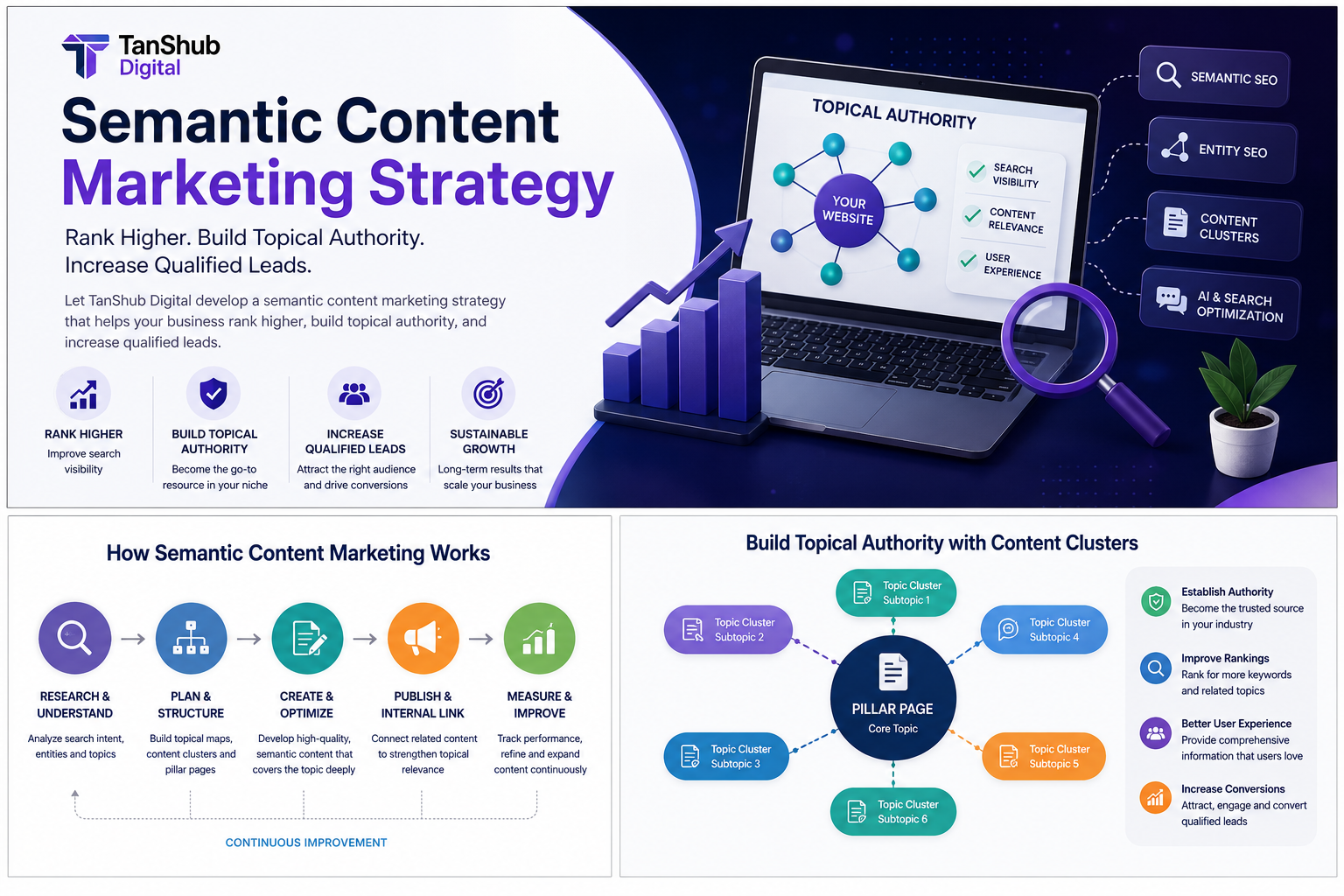
This is where topic clusters, internal linking and semantic relationships become important.
Search Intent vs Keyword Intent
Keyword intent refers to what a particular keyword suggests about the user’s purpose.
Search intent is broader.
It considers:
- The query
- Context
- User problem
- Stage in the journey
- Desired outcome
- Related entities
- Previous questions
- Possible follow-up questions
For example:
| Search | Likely intent |
|---|---|
| What is GEO? | Learn |
| GEO vs SEO | Compare |
| GEO strategy | Explore implementation |
| GEO agency | Find a provider |
| GEO services pricing | Evaluate purchase |
| Best GEO agency for SaaS | Commercial investigation |
A good SEO strategy doesn’t simply assign a keyword to a page.
It maps intent to content type.
Why One Keyword Should Not Always Mean One Page
One of the biggest mistakes in modern content strategy is creating a separate article for every slight variation of a keyword.
Google’s current guidance specifically warns against creating large numbers of pages around variations of queries or “fan-out” queries simply to manipulate rankings or generative AI responses. Google emphasizes creating content that users would genuinely find helpful and satisfying instead.
For example, these don’t necessarily need five separate articles:
- What is AI SEO?
- What does AI SEO mean?
- AI SEO meaning
- What is AI search optimization?
- AI search optimization explained
If the underlying information need is essentially the same, one comprehensive resource may be better.
The objective should be:
One meaningful information need → one strong resource
rather than:
One keyword variation → one thin page
How to Build Content Around Search Intent
A practical approach is to map every important topic across four dimensions.
1. The Question
What is the person actually asking?
2. The Problem
Why are they asking it?
3. The Stage
Are they learning, comparing, evaluating or buying?
4. The Next Question
What are they likely to ask after receiving the answer?
This creates a much stronger content strategy.
For example:
Topic: AI Search Optimization
Question: What is AI Search Optimization?
Problem: The business is losing visibility as customers use AI search.
Stage: Informational.
Next question: How can I optimize my website?
Then create the next relevant resource.
This creates a connected content ecosystem rather than a collection of disconnected blog posts.
Search Intent and Semantic SEO Work Together
This is where search intent and Semantic SEO intersect.
Semantic SEO focuses on meaning, relationships and context rather than relying exclusively on exact keyword matching.
Suppose your target topic is:
AI Search Optimization
A semantically rich content ecosystem could include:
- AI search
- AI Overviews
- AI Mode
- ChatGPT
- Gemini
- Perplexity
- semantic search
- entity SEO
- topical authority
- structured content
- search intent
- conversational queries
- generative search
- citations
- content authority
The goal is not to force these terms into an article.
The goal is to explain the subject comprehensively enough that these concepts naturally become relevant.
TanShub Digital already positions its approach around search intent, semantic search, AI-ready content and broader digital visibility.
That makes search intent a natural strategic pillar for the brand rather than simply another SEO keyword.
How Businesses Can Optimize Content for AI-Era Search Intent
There is no special piece of markup that guarantees visibility in AI search.
Google explicitly says there are no additional technical requirements specifically for appearing in AI Overviews or AI Mode. Existing SEO fundamentals continue to matter.
However, businesses can improve the usefulness and discoverability of their content by following several principles.
Answer the Main Question Early
Don’t make readers search through 1,500 words to find the answer.
Provide a concise answer near the beginning, then expand on it.
Cover the Topic Completely
Address the important questions surrounding the primary topic.
Use Descriptive Headings
Make the information architecture obvious.
Connect Related Concepts
Use internal links to relevant supporting resources.
Include Original Insights
Don’t simply rewrite information already available elsewhere.
Demonstrate Experience
Use examples, case studies, observations and first-hand expertise where appropriate.
Keep Information Current
AI search systems can retrieve current information from the web, so outdated claims can weaken the usefulness of a resource.
Optimize for Humans First
Google’s guidance consistently emphasizes useful, people-first content rather than content created primarily to manipulate search systems.
Search Intent Mapping for a B2B Website
For a B2B company, search intent can be mapped across the buyer journey.
Awareness
What is workforce management software?
Content type:
- Guides
- Definitions
- Educational blogs
Problem identification
How can companies reduce payroll errors?
Content type:
- Problem-solving guides
- Checklists
- Research
Solution exploration
How does payroll automation work?
Content type:
- Explainers
- Solution pages
- Comparison guides
Vendor comparison
Best payroll software for Indian businesses
Content type:
- Comparison pages
- Product guides
- Evaluation resources
Purchase intent
Payroll software pricing India
Content type:
- Pricing pages
- Service pages
- Product pages
This approach is far more useful than publishing content simply because a keyword has a high search volume.
Search Intent Can Reveal Better Content Opportunities
Search volume alone can lead businesses toward crowded keywords.
Search intent can reveal more specific opportunities.
For example, instead of targeting:
digital marketing
a business might discover a more valuable intent:
how to generate B2B SaaS leads through content marketing
The second query may have lower search volume.
But the person searching it has a much clearer business problem.
That can make the traffic more commercially valuable.
This is why qualified search demand can matter more than raw search volume.
How AI Search Makes Long-Tail Queries More Valuable
Long-tail searches have always been useful for SEO.
AI search makes them even more interesting because users can express highly specific information needs conversationally.
Compare:
SEO agency
with:
What should a small B2B technology company look for when choosing an SEO agency that understands AI search and content marketing?
The second query provides much more context.
It tells you:
- Business type
- Company size
- Industry
- Service requirement
- Technology focus
- Evaluation criteria
This creates opportunities for businesses that understand their audiences deeply.
Instead of asking:
“What keywords should we rank for?”
start asking:
“What questions does our ideal customer need answered before they choose us?”
That is a much stronger foundation for content strategy.
How to Measure Search Intent Performance
Search intent should also influence how you measure SEO.
Don’t look only at rankings.
Track:
- Organic impressions
- Clicks
- CTR
- Qualified organic traffic
- Engagement
- Leads
- Conversion rate
- Assisted conversions
- Pages per session
- Search queries
- Content-assisted revenue
For AI search, Google announced new Search Console reporting in June 2026 designed to provide dedicated visibility into impressions from generative AI features such as AI Overviews and AI Mode. The feature is initially being rolled out to a subset of websites.
This is an important development because it moves AI search measurement closer to mainstream SEO reporting.
The Future of SEO Is Not Keywordless SEO
There is a common misconception that AI search means keywords no longer matter.
That is not accurate.
Keywords still provide useful evidence about demand and language.
The difference is that keywords should be treated as signals, not the entire strategy.
A modern SEO workflow can look like this:
Keywords → Search Intent → Topics → Entities → Content → Internal Links → Authority → Search Visibility
This creates a much stronger connection between what people search for and what a business publishes.
A Practical Search Intent Framework for 2026
Before creating a page, ask these seven questions:
1. What does the customer want?
Identify the underlying information need.
2. What problem are they trying to solve?
Understand the business or personal context.
3. What stage are they in?
Determine whether they are learning, comparing, evaluating or buying.
4. What related concepts matter?
Identify entities, topics and subtopics.
5. What questions will they ask next?
Build content around the complete journey.
6. What is missing from existing results?
Find the genuine content gap.
7. What action should the reader take?
Connect informational content to the appropriate commercial resource.
This framework can help transform keyword research into an intent-led content strategy.
What Search Intent Means for Content Marketers
The role of a content marketer is changing.
It is no longer enough to receive a list of keywords and produce an article around each one.
Modern content strategy requires understanding:
- Audience
- Search behavior
- Business objectives
- Search intent
- Topic relationships
- Entities
- Buyer journeys
- Traditional search
- AI search
- Conversion paths
The strongest content teams will increasingly operate somewhere between SEO, research, content strategy, customer experience and digital marketing.
That is particularly important as search interfaces become more conversational.
Final Thoughts
AI search is not eliminating search intent.
It is making search intent more important.
When users move from short keyword searches to detailed questions, comparisons and follow-up conversations, businesses need to understand the information need behind the query, not just the words inside it.
The future of effective SEO therefore isn’t:
More keywords.
It is:
Better understanding.
Better understanding of the customer.
Better understanding of the question.
Better understanding of context.
Better understanding of the topic.
And better understanding of where that question fits within the buyer journey.
Google’s current AI search guidance reinforces this direction. Its AI experiences rely on core Search systems, while AI Mode and AI Overviews can explore related queries and sources to provide answers to more complex information needs.
For businesses, that means the winning content strategy is not to create a page for every possible query.
It is to create useful, authoritative resources that genuinely satisfy the underlying intent behind important questions.
At TanShub Digital, we approach digital growth through search intent, semantic content, AI search optimization and content strategies designed around how customers actually discover and evaluate businesses.
Search is changing from keywords to conversations. Your content strategy should change with it.