Buying property rarely starts with a phone call to a builder or real estate agent.
A buyer may begin by asking:
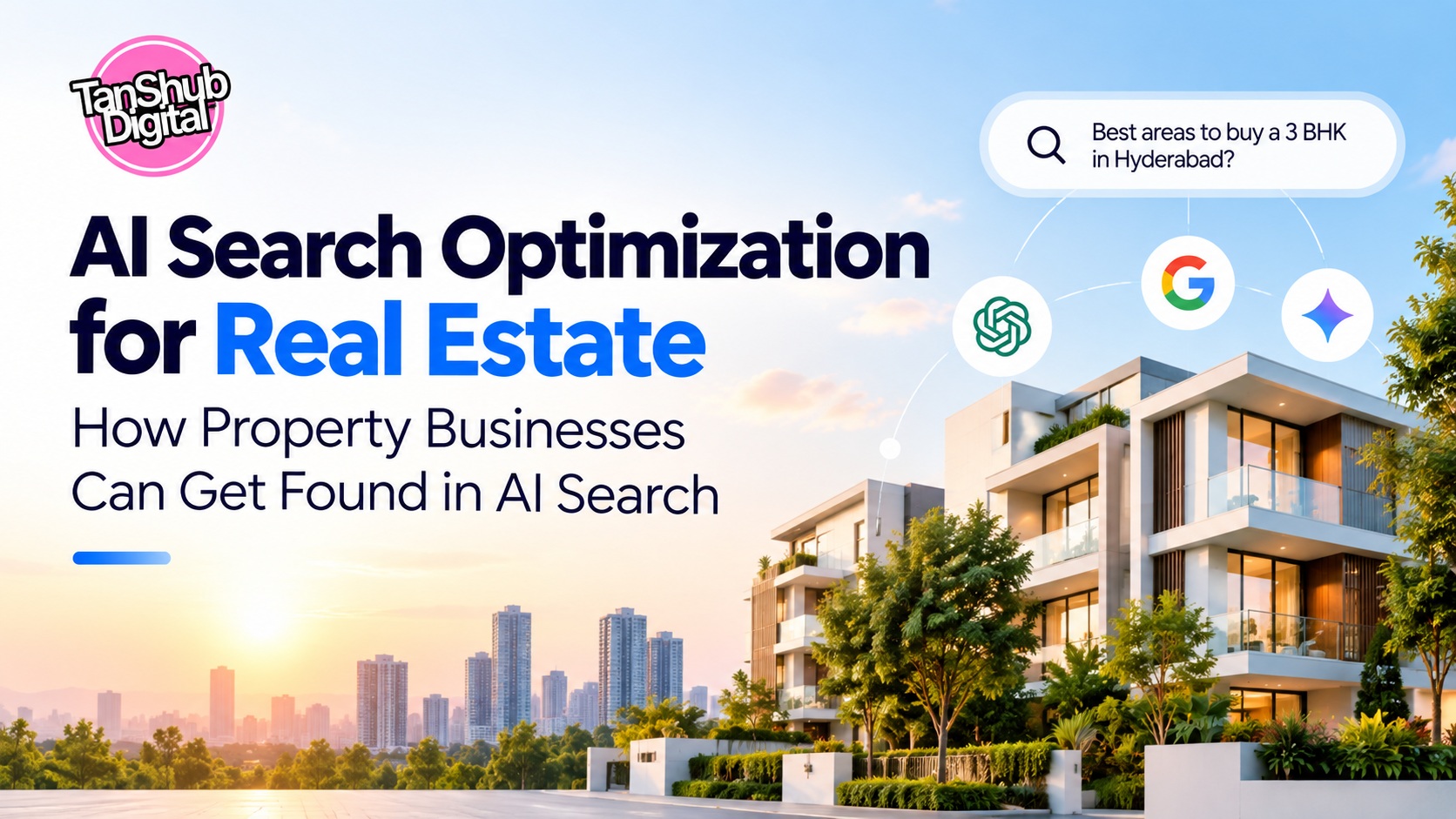
- Which are the best areas to buy a 3 BHK in Hyderabad?
- Which localities are suitable for families?
- What should I check before buying an apartment?
- Which builders have projects near Gachibowli?
- Is buying property in this area a good option?
- What documents should I verify before purchasing a flat?
- Which real estate companies have projects in this location?
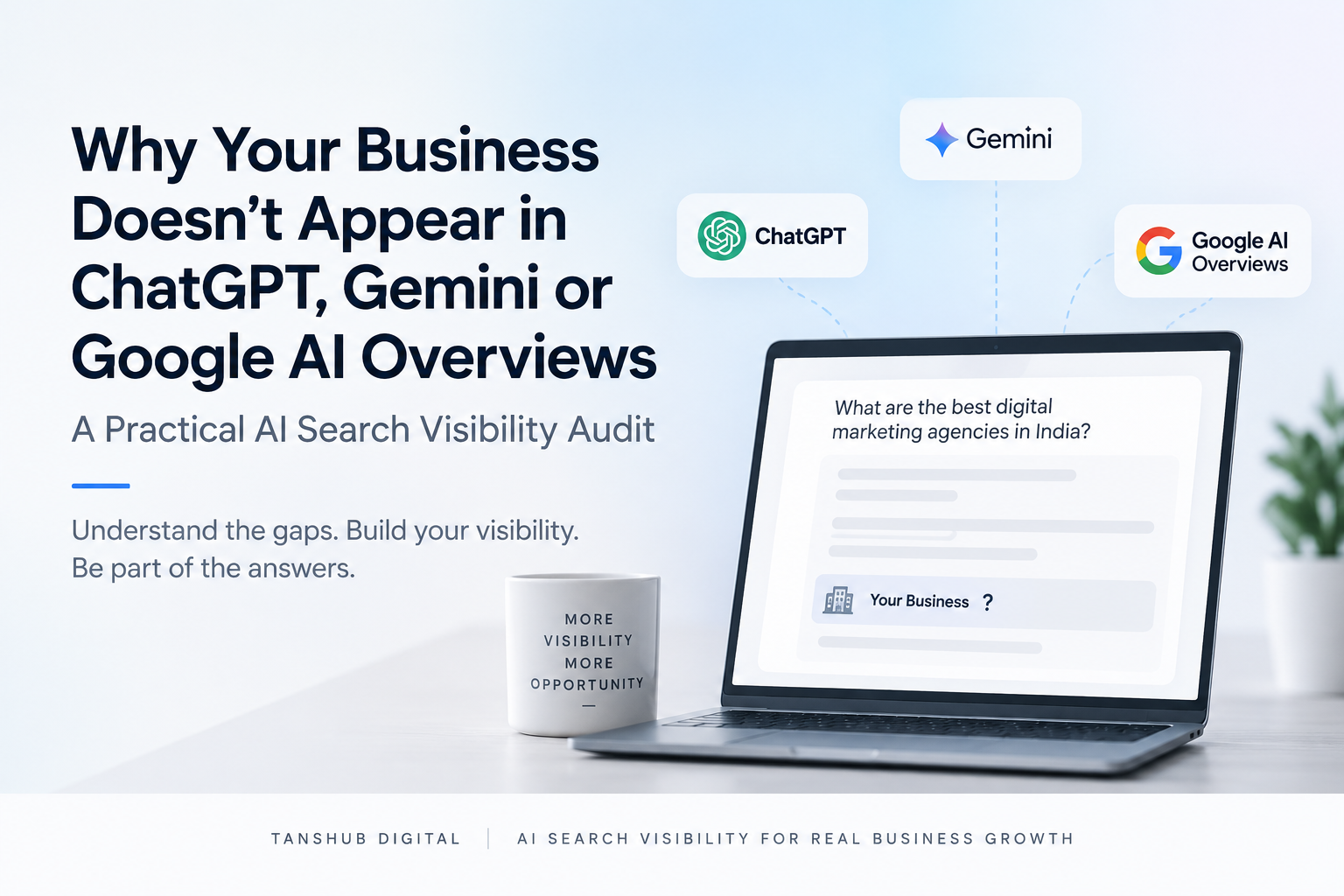
Increasingly, people can ask questions like these through conversational search and AI-powered search experiences rather than relying only on traditional search results.
That changes the way real estate businesses need to think about online visibility.
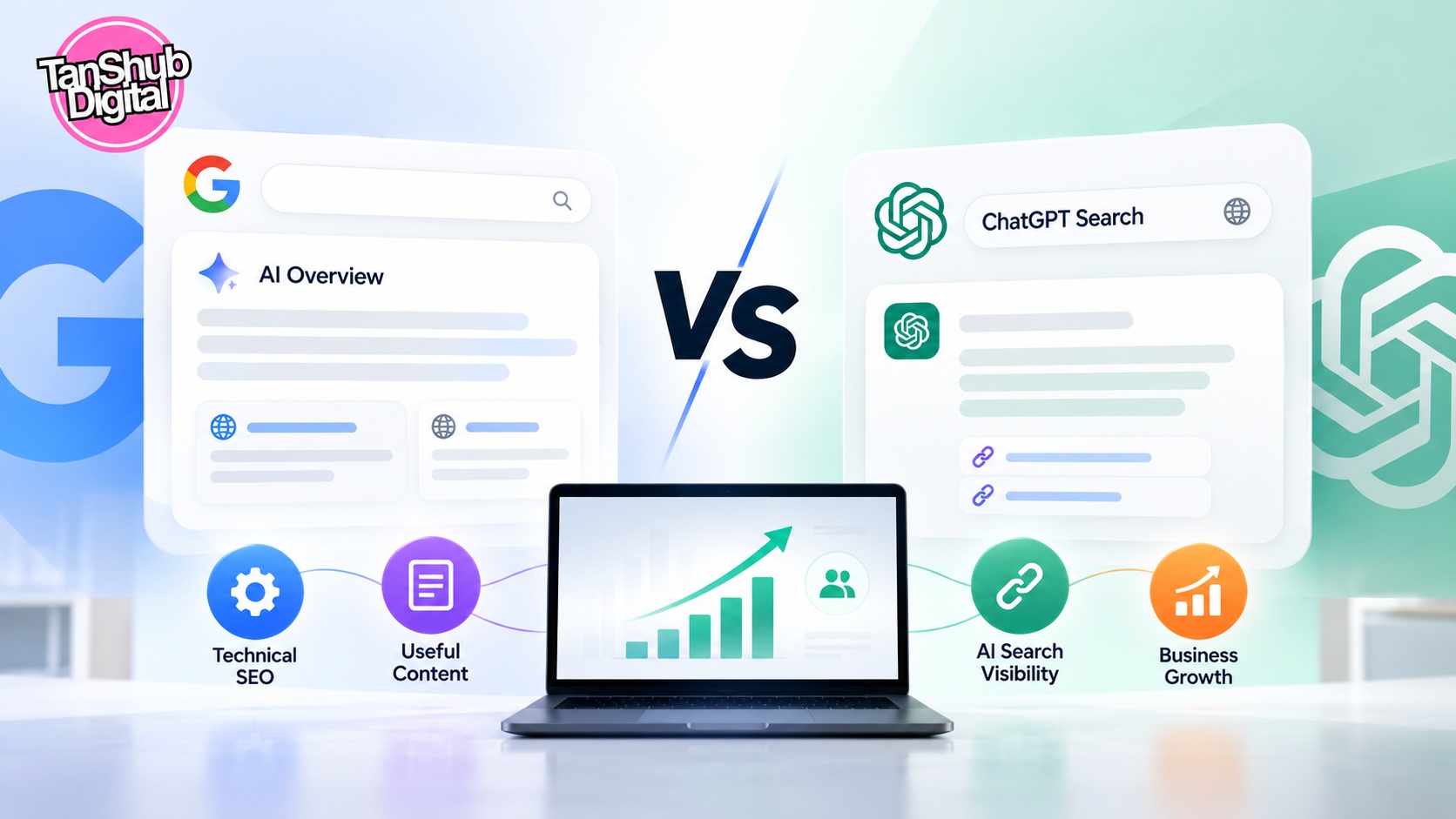
Google continues to develop AI-powered search experiences, while ChatGPT can search the web and provide answers with links to relevant sources. OpenAI also states that public websites can appear in ChatGPT search when they are discoverable to its search systems.
For a real estate company, the opportunity is not simply to rank for “apartments for sale in Hyderabad.”
The bigger opportunity is to become a useful, understandable and trustworthy source when potential buyers, investors and property seekers ask broader questions about properties, locations, developers and the buying process.
That is where AI Search Optimization for Real Estate comes in.
What Is AI Search Optimization for Real Estate?
AI Search Optimization is the process of improving a real estate business’s website, content, entity information and digital presence so that search engines and AI-powered discovery systems can better understand what the business offers, where it operates and why its information is relevant to users.
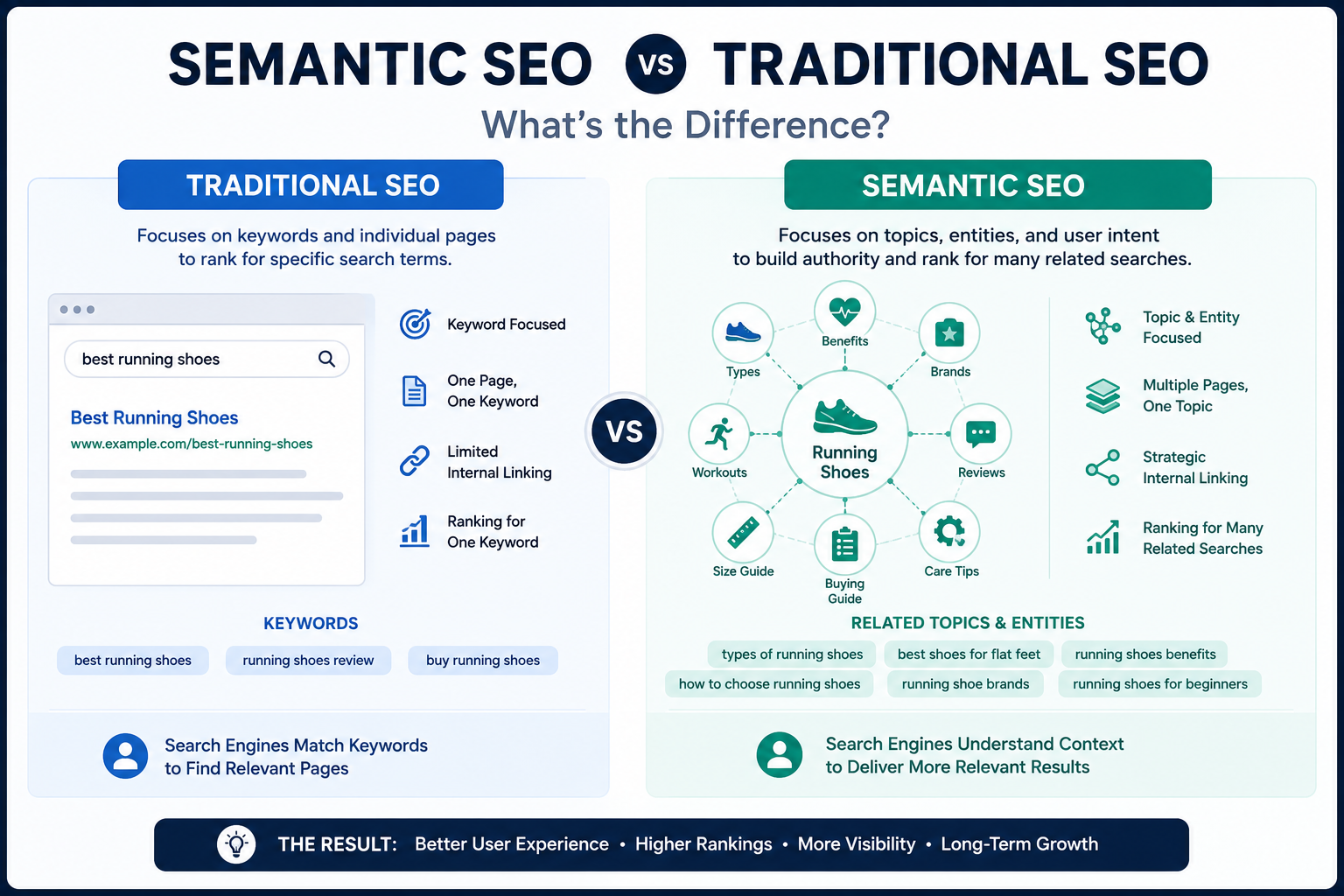
Traditional SEO often focuses on questions such as:
What keyword should this page rank for?
AI Search Optimization asks a broader set of questions:
- What does this business do?
- Which locations does it serve?
- What properties or services does it offer?
- Who is it relevant to?
- What questions can it answer?
- What evidence supports its claims?
- How is the business connected to relevant locations, services and topics?
- Can search systems clearly understand the information on the website?
This does not mean abandoning traditional SEO.
Instead, real estate businesses should think about:
Technical SEO + Semantic SEO + Local SEO + Content + Entity Signals + AI Search Optimization
as connected parts of one search visibility strategy.
Google itself explains that structured data helps it understand the content and meaning of webpages, while its Search documentation now includes AI-powered search experiences among the ways websites can appear in search.
Why AI Search Matters for Real Estate Businesses
Real estate has a particularly complex search journey.
A person looking for a property may not know the exact project, builder, or locality they want when they begin researching.
Their journey could look like this:
Need → Location → Research → Comparison → Shortlisting → Verification → Enquiry → Site Visit → Purchase
At every stage, the questions change.
Early-stage search
What are the best residential areas in Hyderabad?
Research-stage search
What are the advantages of living in Gachibowli?
Comparison-stage search
Gachibowli vs Kondapur for buying a family home
Commercial search
Best 3 BHK apartments in Gachibowli
Transactional search
3 BHK apartments for sale near Gachibowli
Verification search
What documents should I check before buying an apartment?
However, a real estate website that only creates property listing pages may address only a small part of this journey.
Additionally, a website that answers the broader questions can build a much stronger information ecosystem.
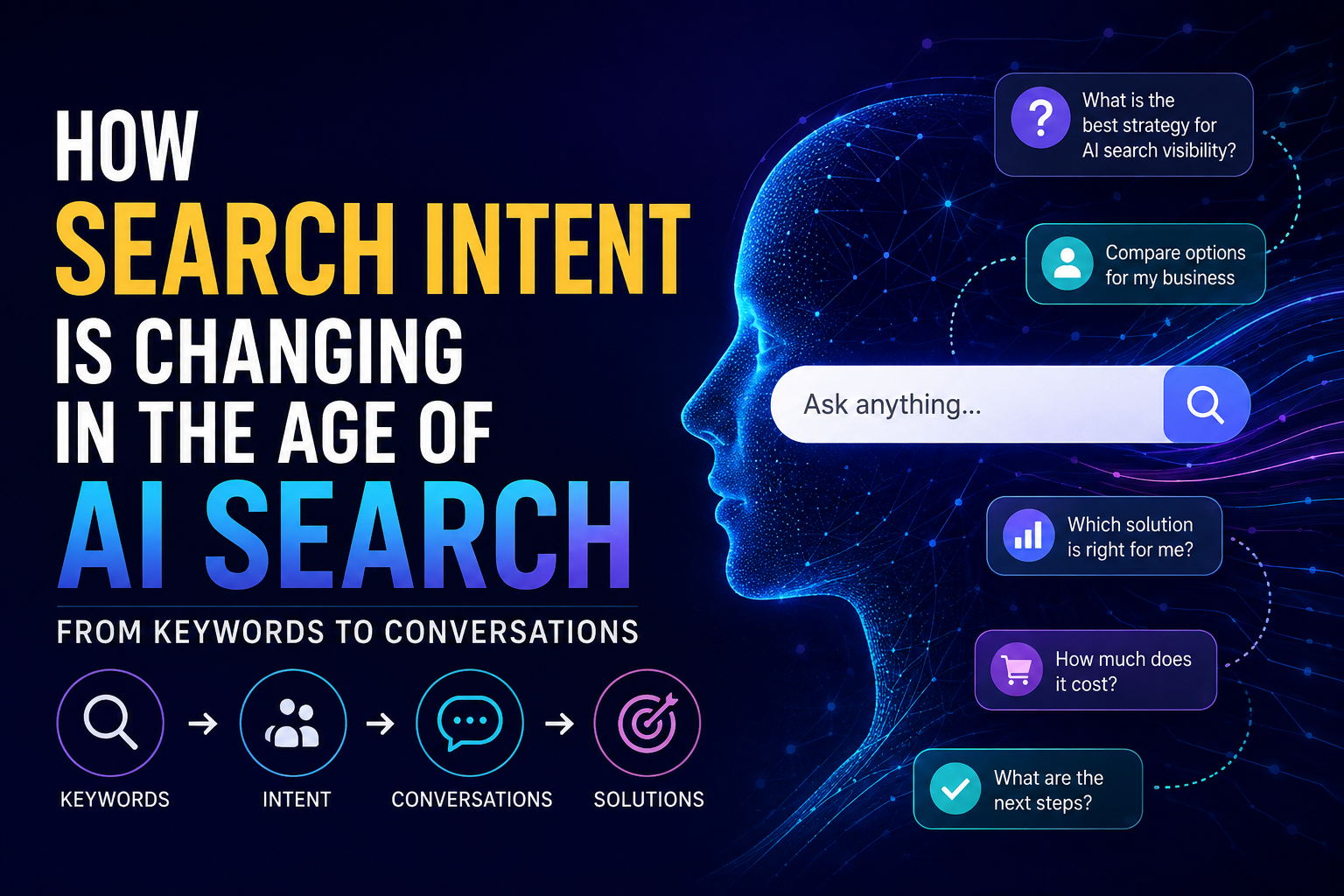
How People Search for Real Estate Is Changing
Traditional search behavior often looks like this:
Keyword → Search results → Website → Information
Conversational search can look more like:
Question → AI-generated response → Sources → Follow-up question → Website
For example, instead of searching:
“Best apartments Hyderabad”
a user might ask:
“I’m looking for a 3 BHK apartment in Hyderabad for a family. Which areas should I consider if I want good connectivity, schools and access to IT employment hubs?”
That is not a single-keyword query.
It contains multiple entities and relationships:
Property type + location + audience + lifestyle + infrastructure + employment + intent
This is one reason semantic understanding matters so much in modern search.
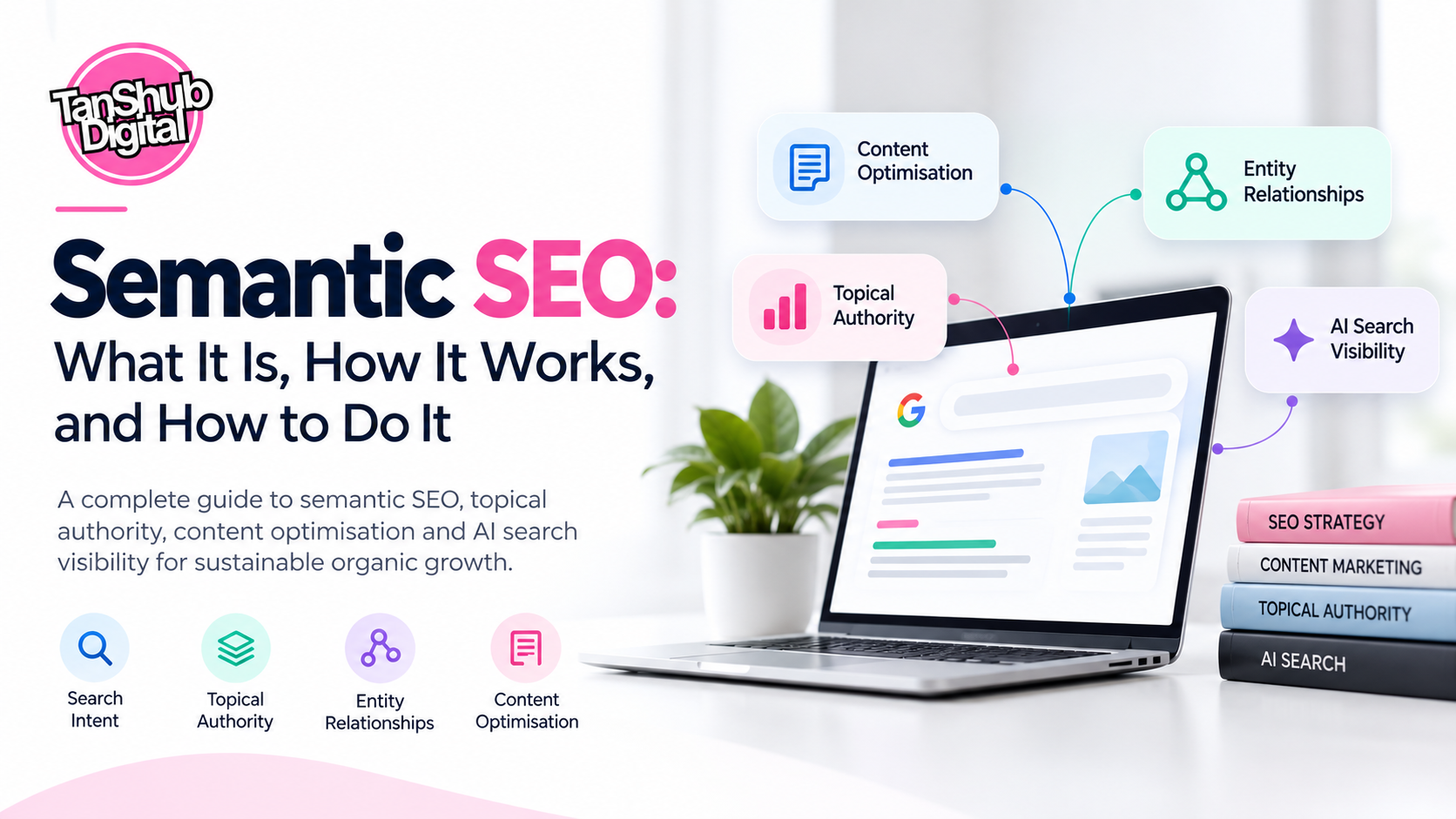
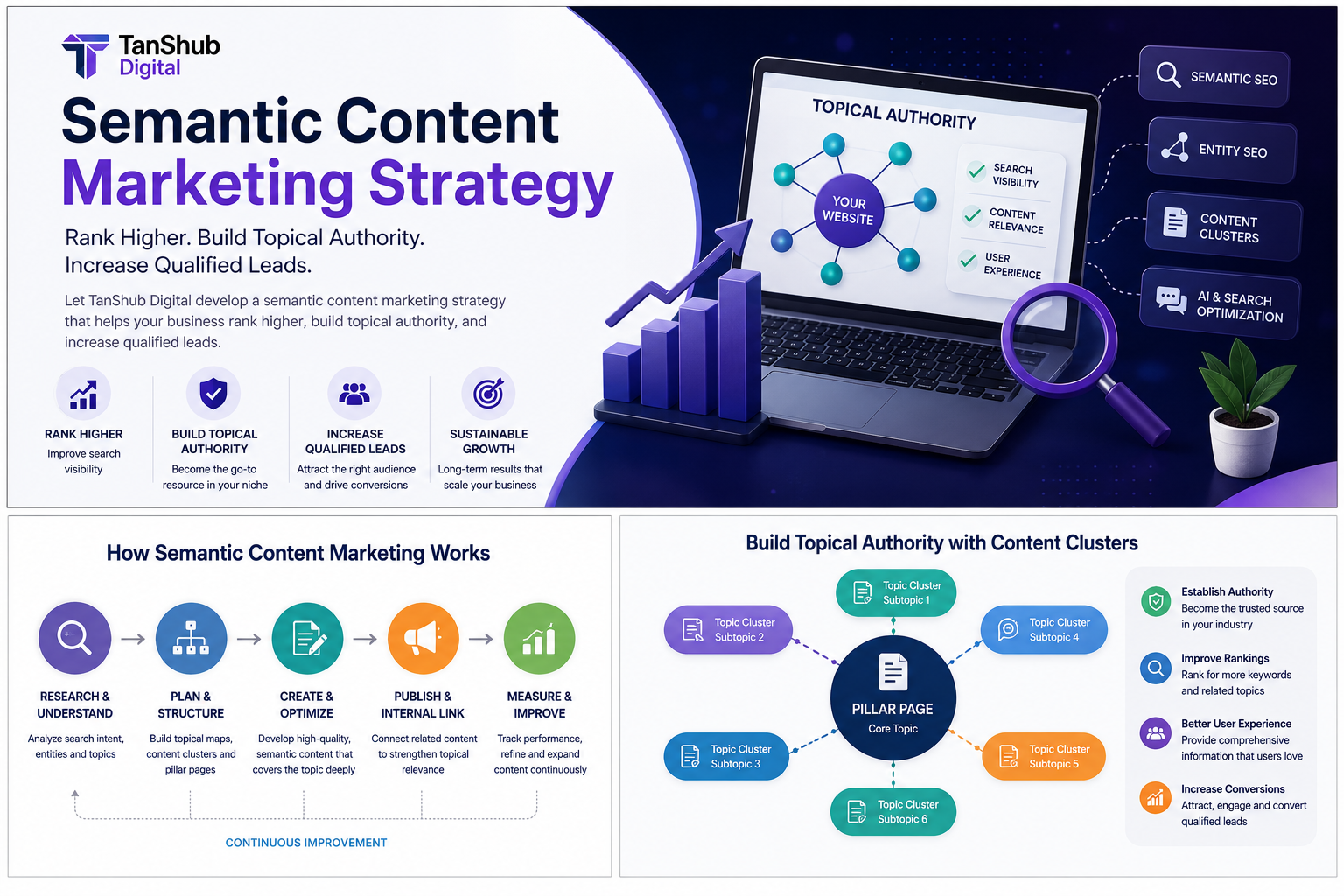
TanShub Digital’s Search Optimization approach already incorporates search intent mapping, entity relationships, topical authority and semantic content.
What Does AI Search Look for in a Real Estate Website?
There is no single checklist that guarantees a business will be recommended by an AI system.
Search systems use different technologies and signals, and their behavior can change.
However, a real estate website should make its information easy to discover, understand and verify.
Several areas deserve particular attention.
1. Clear Business Information
Search systems should be able to understand:
- Business name
- Business type
- Locations served
- Services
- Property categories
- Contact information
- Physical location where applicable
- Areas of expertise
- Brand relationships
Consistency matters.
If your website says one thing, your business profiles say another and third-party websites contain outdated information, understanding the business becomes more difficult.
2. Strong Real Estate Content
A property business should not rely exclusively on property listings.
Build useful content around the questions customers actually ask.
For example:
Location content
- Best residential areas in Hyderabad
- Gachibowli property guide
- Kondapur property guide
- Property buying in Financial District
- Best areas for families in Hyderabad
Property content
- 2 BHK vs 3 BHK
- Apartment vs villa
- New construction vs resale property
- Gated community buying guide
Investment content
- Factors to consider before investing in property
- Rental yield considerations
- Location evaluation
- Infrastructure and connectivity considerations
Buyer education
- Documents to check before buying property
- Questions to ask a builder
- Home loan considerations
- Property registration process
- Common property-buying mistakes
This creates a connected topical ecosystem instead of a website containing hundreds of disconnected property pages.
3. Build Topical Authority Around Real Estate
Suppose a real estate company wants visibility for:
Apartments in Hyderabad
One page targeting that phrase is unlikely to demonstrate the full depth of the subject.
Instead, build a content cluster.
Pillar
Apartments in Hyderabad: Complete Buying Guide
Then create supporting content:
- Best areas to buy apartments in Hyderabad
- 2 BHK vs 3 BHK apartments
- Apartment buying checklist
- New vs resale apartments
- Apartment amenities buyers should evaluate
- Documents required when buying an apartment
- Questions to ask before booking an apartment
- Property investment considerations in Hyderabad
These pages can be internally linked.
Google describes structured data as a way to help its systems understand page content, while semantic relationships and internal linking can help establish how different pieces of information fit together.
4. Optimise for Real Estate Entities
Keywords are only one part of the picture.
Real estate businesses operate within a network of entities.
For example:
Builder → Project → Location → Property Type → Amenities → Locality → City
A property page could contain information about:
- Developer
- Project
- Location
- Property type
- Configuration
- Amenities
- Possession information
- Nearby landmarks
- Connectivity
- Pricing information
- Buyer eligibility
- Contact information
The clearer these relationships are, the easier it becomes for search systems to interpret the page.
This is why Entity SEO and Semantic SEO are important components of a broader AI Search Optimization strategy.
TanShub Digital specifically positions Entity SEO around relationships, topical authority, semantic relevance and knowledge-graph-related signals.
5. Make Location Signals Strong
Real estate is inherently local.
Someone searching for a property usually cares about a particular:
City → Area → Locality → Neighbourhood → Project
Therefore, local search should be part of the strategy.
A real estate business should maintain accurate and consistent information across relevant platforms and build useful location-specific content.
Important areas include:
- Google Business Profile
- Location pages
- Local citations
- Reviews
- NAP consistency
- Local content
- Nearby landmarks
- Service areas
- Local business information
TanShub’s Search Optimization service already includes Google Business Profile optimisation, local search optimisation, location pages, citations, NAP consistency and review optimisation.
6. Answer the Questions Buyers Actually Ask
One of the simplest ways to make a real estate website more useful is to stop writing only about what the company wants to sell.
Start answering what the buyer wants to know.
For example:
Instead of:
Luxury Apartments in Hyderabad
Create content that answers:
What should you look for when buying a luxury apartment in Hyderabad?
Then explain:
- Location
- Builder reputation
- Construction quality
- Floor plans
- Amenities
- Maintenance
- Connectivity
- Legal documentation
- Community infrastructure
- Resale considerations
The product can still be introduced naturally within the article.
The difference is that the content begins with user intent, not the sales pitch.
7. Create Content That Supports Every Stage of the Buying Journey
A strong real estate content strategy should cover the entire funnel.
| Buying stage | Example question | Useful content |
|---|---|---|
| Awareness | Where should I buy? | Location guides |
| Research | What type of property should I choose? | Property guides |
| Comparison | Which area is better for my needs? | Area comparisons |
| Evaluation | Which builder should I consider? | Developer/project information |
| Verification | What should I check? | Buying checklists |
| Decision | Which property fits my requirements? | Detailed project pages |
| Action | How do I enquire? | Contact and enquiry pages |
This is where Semantic Content Marketing becomes particularly useful.
Instead of producing blogs simply because a keyword has search volume, create a connected content system that helps a potential customer move from one question to the next.
8. Don’t Forget Technical SEO
AI Search Optimization is not a replacement for technical SEO.
A website still needs to be:
- Crawlable
- Indexable
- Mobile-friendly
- Fast
- Secure
- Well structured
- Internally linked
- Properly canonicalised
- Free from major indexing problems
XML sitemaps, structured data, clean architecture and appropriate crawl controls remain important foundations.
Google’s documentation recommends ensuring pages can be crawled and indexed and provides tools such as URL Inspection for checking how Google accesses pages.
9. Use Structured Data Where It Makes Sense
Structured data helps search engines understand what a webpage represents.
For a real estate website, relevant structured information may include entities such as:
- Organisation
- Local business
- Article
- Breadcrumb
- FAQ-related content where appropriate
- Product or other supported types where genuinely applicable
The important point is not to add schema simply because it exists.
The structured data should accurately describe the visible content on the page and follow search engine guidelines.
Google states that structured data can help its systems understand page content and may make pages eligible for certain search features.
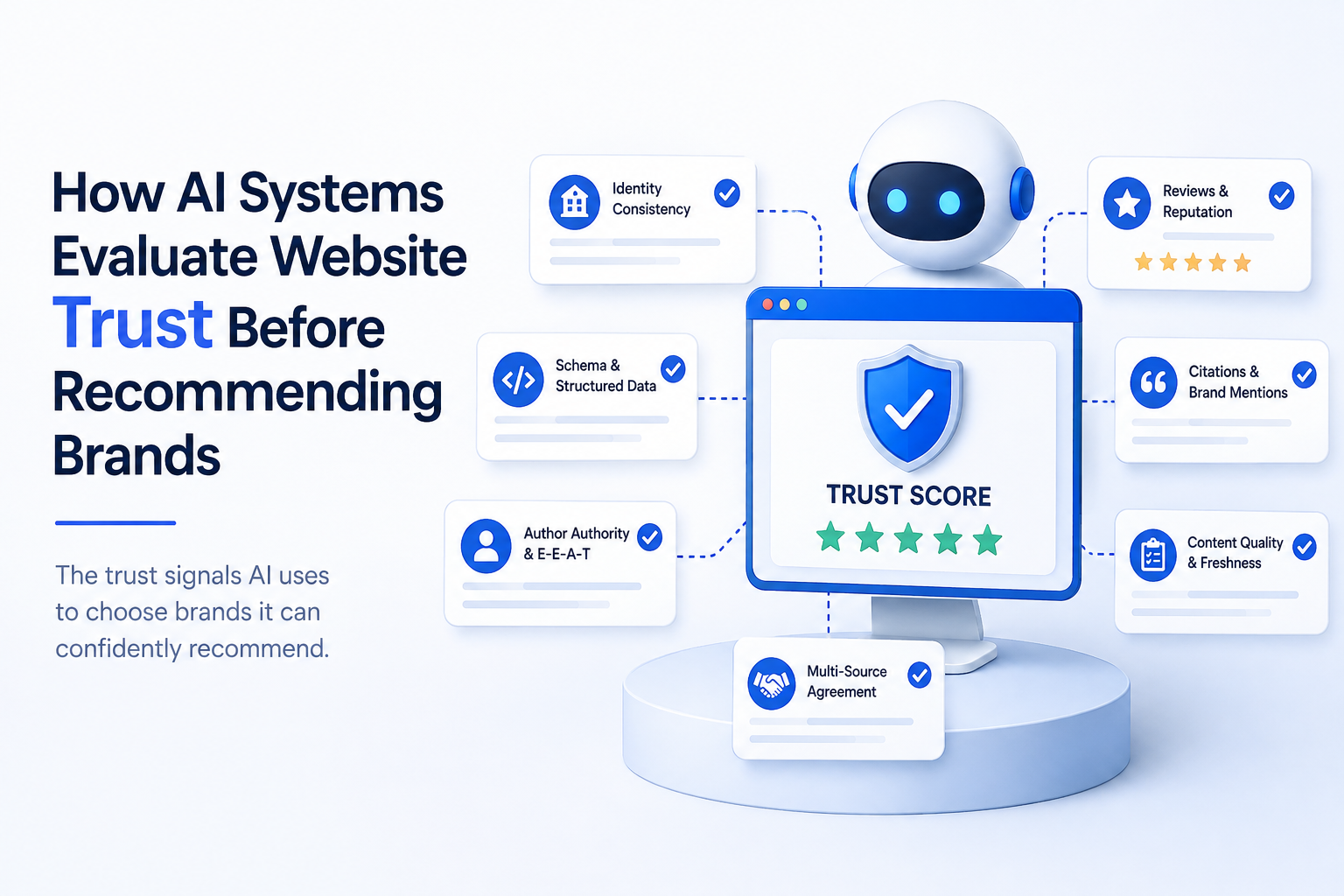
10. Build Trust Beyond Your Website
A real estate business cannot establish credibility through its own website alone.
Potential buyers may also look at:
- Reviews
- Business profiles
- Industry directories
- News coverage
- Professional profiles
- Social media
- Property portals
- Third-party references
- Customer experiences
- Public company information
The objective should not be to manufacture mentions.
Instead, build a genuine and consistent digital presence.
When information about the business is consistent across multiple credible sources, customers have more ways to verify what they see.
Can You Optimise a Real Estate Business Specifically for ChatGPT?
You can optimise the website and digital presence for discoverability and clarity, but there is no legitimate technique that guarantees ChatGPT will recommend a particular company.
OpenAI says that any public website can appear in ChatGPT search and advises publishers to ensure that OAI-SearchBot is not blocked if they want content to be discoverable and potentially surfaced and cited.
That means technical accessibility matters.
It also means businesses should avoid claims such as:
“Do this and ChatGPT will rank you #1.”
AI search does not work like a conventional ten-blue-links ranking system.
A better objective is:
Make the business easy to discover, understand, verify and cite.
What About Google AI Overviews?
Google’s AI-powered search experiences use information from multiple sources across the web.
Google’s documentation notes that AI Overviews and AI Mode can use web sources, and its search documentation continues to evolve as these experiences develop.
For real estate businesses, this reinforces the need for:
- Helpful content
- Strong topical coverage
- Clear entities
- Technical accessibility
- Relevant local information
- Credible sources
- Well-structured pages
- Accurate business information
There is no special “AI Overview trick” that replaces good SEO fundamentals.
GEO, AEO and SEO for Real Estate: How Do They Fit Together?
These terms can sound confusing.
Think of them as overlapping disciplines rather than completely separate marketing channels.
SEO
Helps improve visibility in traditional search.
Semantic SEO
Helps search systems understand topics, entities, relationships and intent.
AEO
Focuses on providing clear answers for answer-driven search experiences.
GEO
Focuses on visibility within generative search experiences.
AI Search Optimization
Can be used as the broader strategic approach that considers how businesses are discovered and represented across modern AI-powered search experiences.
For a real estate company, these shouldn’t operate as five disconnected campaigns.
They should work together.
SEO + Semantic SEO + AEO + GEO + Local SEO + Content
can form one integrated search visibility strategy.
A Practical AI Search Optimization Checklist for Real Estate
Before publishing or reviewing your real estate website, ask:
Business
- Is the business clearly identified?
- Are its services easy to understand?
- Are locations clearly stated?
- Is contact information consistent?
Website
- Can search engines crawl the important pages?
- Are important pages indexed?
- Is the website technically sound?
- Is the architecture logical?
Content
- Does the site answer real buyer questions?
- Are informational and commercial intents covered?
- Are location-specific topics covered?
- Are comparison and evaluation questions addressed?
Semantic SEO
- Are related topics connected?
- Are important entities clearly defined?
- Are supporting pages internally linked?
- Does the site demonstrate topical depth?
Local SEO
- Is the Google Business Profile accurate?
- Are reviews being managed?
- Are location signals consistent?
- Are relevant location pages available?
AI Search
- Can AI systems understand what the business does?
- Can they identify the locations it serves?
- Is important content accessible to relevant crawlers?
- Does the website provide useful information rather than thin promotional copy?
- Are important claims supported by credible information?
Trust
- Is business information consistent across the web?
- Are there genuine third-party references?
- Are reviews authentic?
- Are authors and expertise clearly represented where appropriate?
The Future of Real Estate Search Is Not “AI Instead of Google”
This is an important distinction.
Real estate businesses should not abandon Google SEO because AI search is growing.
They should build a search strategy that works across multiple discovery environments.
A prospective buyer might:
Google a location → read a guide → ask ChatGPT a follow-up question → compare projects → check Google Maps → visit a developer’s website → watch social content → submit an enquiry.
The customer journey is becoming more connected.
Your marketing strategy should be connected too.
That means the goal is not simply:
Rank higher.
It is:
Be discoverable → Be understandable → Be trusted → Be considered → Generate demand.
That is also consistent with TanShub Digital’s broader positioning around getting businesses found, helping them get chosen and turning visibility into qualified demand.
How TanShub Digital Can Help Real Estate Businesses
Real estate businesses need more than isolated SEO activities.
They need a connected search and content strategy built around their:
- Business
- Locations
- Properties
- Audiences
- Buying journeys
- Search behavior
- Competitive environment
TanShub Digital combines AI Search Optimization, Semantic SEO, Local SEO, content strategy, entity optimisation and technical SEO to build search visibility across traditional and AI-powered discovery channels.
For a real estate business, this can include:
AI Search Readiness
Understand how easily search systems can discover and interpret your business.
Semantic SEO
Build topical authority around properties, locations, buyers and real estate topics.
Real Estate Content Strategy
Create content around the questions customers ask before, during and after property research.
Local SEO
Strengthen visibility around cities, neighbourhoods, projects and service areas.
Entity SEO
Build clearer relationships between your business, properties, locations, services and relevant entities.
Technical SEO
Improve crawlability, indexing, architecture, structured data and other technical foundations.
The objective is not to chase every new AI platform.
It is to build a digital presence that is clear, useful, authoritative and discoverable across the evolving search landscape.
Final Thoughts
Real estate search is becoming more conversational and more complex.
A potential buyer no longer needs to start with the name of a builder or project. They can begin with a question about a location, lifestyle, investment decision, property type or buying problem.
That creates a significant opportunity for real estate businesses that build useful digital information around those questions.
AI Search Optimization should therefore not be treated as a replacement for SEO.
It should be treated as an evolution of the broader search visibility strategy.
Strong technical foundations.
Useful content.
Semantic relationships.
Clear entities.
Local visibility.
Credible information.
Consistent digital signals.
Together, these elements can help a real estate brand become easier for both people and modern search systems to discover, understand and evaluate.
And that is ultimately what AI Search Optimization for Real Estate should be about.
Frequently Asked Questions
What is AI Search Optimization for real estate?
AI Search Optimization for real estate is the process of improving a property business’s website, content, entity information and digital presence so that AI-powered and traditional search systems can better discover, understand and surface its information.
Is AI Search Optimization the same as SEO?
No. AI Search Optimization overlaps with SEO but considers additional factors such as entities, semantic relationships, conversational search, AI-generated answers and the discoverability of information across AI-powered search experiences.
Can real estate businesses appear in ChatGPT search?
Yes. OpenAI states that public websites can appear in ChatGPT search. Websites should ensure that relevant content can be discovered by OpenAI’s search systems and should not unintentionally block OAI-SearchBot.
Does GEO replace traditional SEO?
No. GEO and AI Search Optimization should complement traditional SEO. Technical SEO, useful content, search intent, local visibility and topical authority remain important foundations.
What type of content should real estate businesses create?
Real estate businesses can create location guides, property buying guides, comparison content, investment education, buyer checklists, project information, FAQs and other content that answers genuine customer questions throughout the buying journey.
How important is local SEO for real estate?
Local SEO is particularly important because property searches are strongly connected to cities, neighbourhoods, localities and individual projects. Google Business Profile optimisation, location pages, reviews and consistent local information can form part of a broader local search strategy.