
Published: July 30, 2026
In the early days of search engine optimization, content marketing was a relatively simple game. You identified a target keyword, sprinkled it throughout your article a specific number of times, built a few backlinks, and watched your page climb the rankings. That linear, keyword-stuffing approach worked—until it didn’t. Today’s search landscape is radically different. Google’s algorithms have evolved from simple pattern-matching systems into sophisticated artificial intelligence engines capable of understanding context, relationships, and meaning. Welcome to the era of semantic content marketing.
If you’re still creating content based on isolated keywords and rigid density formulas, you’re not just behind the curve—you’re invisible. Modern search engines don’t merely index words; they map knowledge, understand entities, and interpret user intent with remarkable precision. Semantic SEO isn’t a buzzword or a fleeting trend. It represents a fundamental shift in how digital content is discovered, evaluated, and ranked. This comprehensive guide will walk you through everything you need to know about building a semantic content strategy that drives sustainable organic traffic, establishes genuine topical authority, and future-proofs your digital presence against algorithmic volatility.
What Is Semantic Content Marketing?
Semantic content marketing is a strategic approach to creating and optimizing digital content that prioritizes meaning, context, and topical relationships over isolated keyword targeting. Rather than optimizing a single page for a single keyword, semantic content marketing focuses on building comprehensive content ecosystems that cover entire subject areas, address multiple layers of user intent, and signal deep expertise to search engines.
The term “semantic” derives from the study of meaning in language. In the context of search and content, it refers to how search engines like Google use natural language processing (NLP), machine learning, and massive knowledge databases to understand the relationships between words, concepts, and entities. When Google processes a query, it doesn’t just look for pages containing those exact words. It interprets what the user is actually looking for, considers related concepts and entities, and surfaces content that best satisfies the underlying informational need.
This shift has been driven by several major algorithmic developments. The introduction of the BERT algorithm (Bidirectional Encoder Representations from Transformers) in 2019 marked a watershed moment, enabling Google to better understand the context of words in search queries. The subsequent Helpful Content Update and various core updates have doubled down on rewarding content that demonstrates genuine expertise and comprehensive topical coverage. Search engines now evaluate content not just by the presence of keywords, but by semantic relevance—how well a piece of content covers a topic in its entirety, how it connects to related concepts, and whether it truly serves the user’s underlying intent.
Why Traditional Keyword-Based SEO Is No Longer Enough
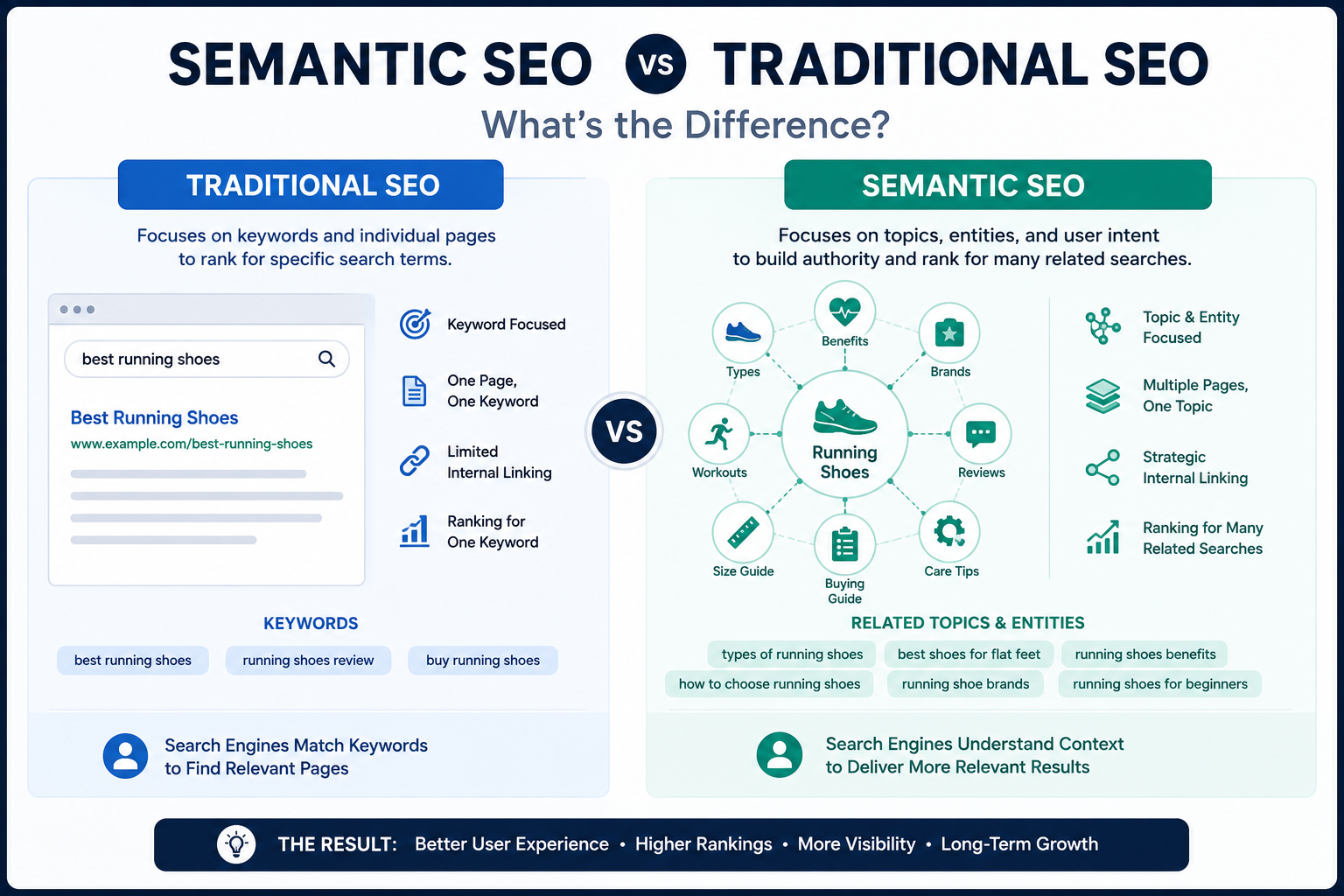
To appreciate the power of semantic content marketing, you need to understand the limitations of the old approach. Traditional SEO operated on a one-to-one mapping principle: one page, one primary keyword, several secondary keywords, exact-match anchor text, and a focus on search volume above all else. This methodology created several critical problems.
First, it led to an explosion of thin, repetitive content. Websites would create dozens of nearly identical articles targeting slight keyword variations—”best running shoes,” “top running shoes,” “good running shoes for beginners”—each saying essentially the same thing. This fragmented approach diluted site authority and created poor user experiences. Second, it ignored the complexity of human language and search behavior. Real people don’t think in keywords; they think in questions, problems, and topics. A user searching for “how to train for a marathon” might also be interested in nutrition plans, injury prevention, gear recommendations, and recovery strategies. A keyword-optimized page about “marathon training schedule” might capture the query but miss the broader informational context.
Third, and most importantly, traditional keyword targeting fails to build topical authority. Search engines today want to send users to sources that are unquestionably expert in their domain. A website with one excellent article about a topic but nothing else on related subjects signals limited expertise. In contrast, a site with a deeply interconnected web of content covering every facet of a subject area signals genuine authority. This is where semantic content marketing fundamentally changes the game.
The Core Pillars of Semantic Content Marketing
A successful semantic content strategy rests on several interconnected pillars. Understanding and implementing each of these components is essential for building a content ecosystem that search engines recognize as authoritative and comprehensive.
1. Topic Clusters and Pillar Pages
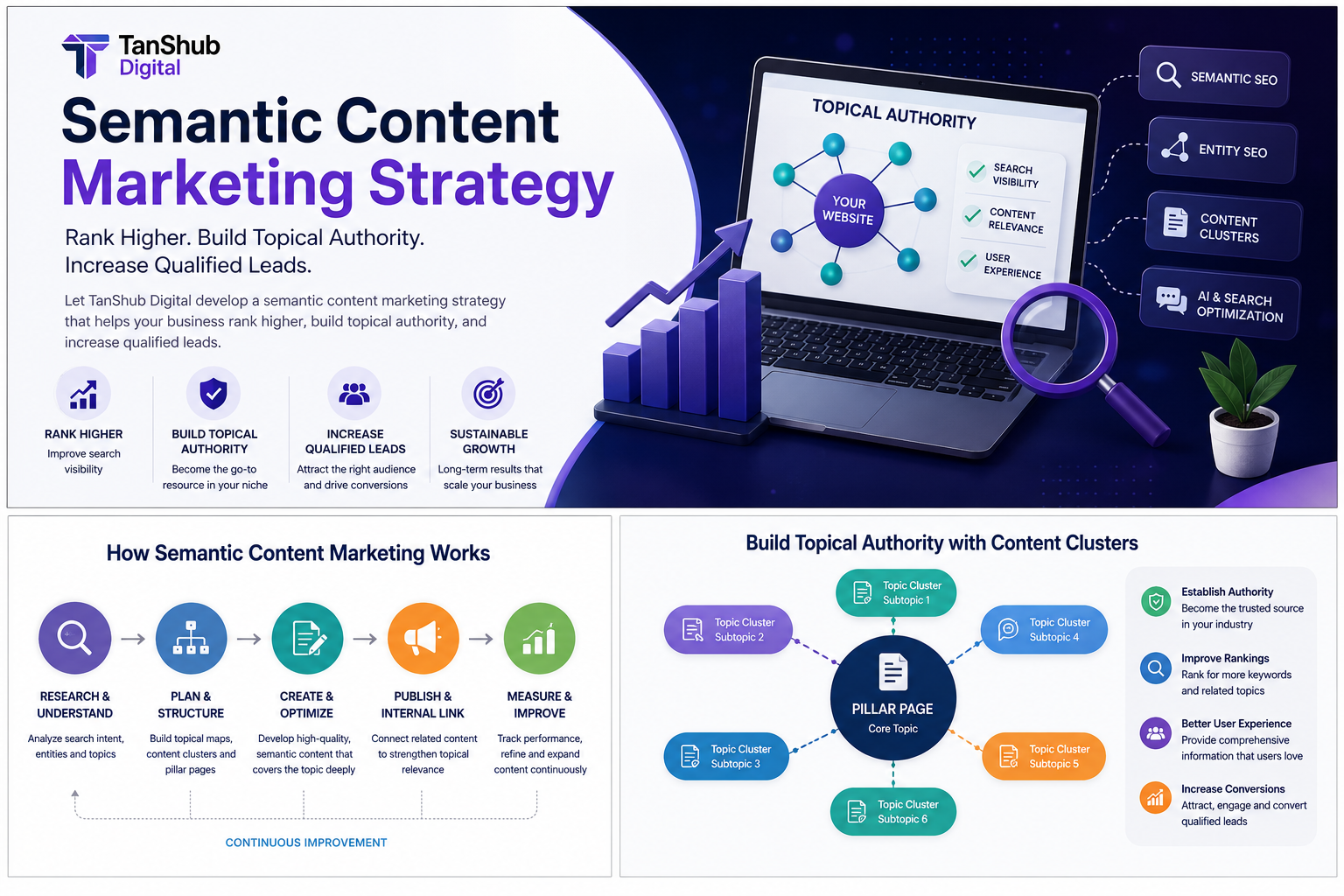
At the heart of semantic content marketing lies the topic cluster model. Instead of creating standalone articles targeting individual keywords, you organize your content into clusters centered around broad pillar pages that cover a core topic in exhaustive detail. Each pillar page links out to multiple cluster content pieces that explore specific subtopics, questions, and related concepts in greater depth. Those cluster pieces, in turn, link back to the pillar page.
This architecture does several things simultaneously. It creates clear semantic relationships between your content pieces, helping search engines understand how your articles relate to one another and which pages represent the authoritative center of each topic area. It distributes link equity efficiently throughout your site. And perhaps most importantly, it ensures that no aspect of a topic is left uncovered. When a user lands on any piece of your cluster content, they have access to the entire universe of related information on your site.
For example, if you run a financial planning website, you might create a pillar page on “Retirement Planning Strategies.” Your cluster content would then cover subtopics like “401(k) Contribution Limits,” “Roth IRA vs. Traditional IRA,” “Social Security Optimization,” “Retirement Tax Strategies,” “Healthcare Costs in Retirement,” and “Estate Planning Basics.” Each cluster article links back to the main pillar, and the pillar links to every cluster piece. This structure tells Google: “We don’t just know about retirement planning keywords. We understand the entire domain.”
2. Entity-Based SEO and the Knowledge Graph
Modern search has moved beyond strings of text to entities—distinct, well-defined concepts, people, places, organizations, and things that exist in Google’s Knowledge Graph. When you search for “Apple,” Google doesn’t just look for pages containing that word. It understands that “Apple” could refer to the technology company, the fruit, or the record label, and it uses context to determine which entity you mean.
Entity-based SEO means optimizing your content to clearly associate your brand and content with specific entities and their relationships. This involves mentioning relevant entities naturally within your content, using structured data and schema markup to help search engines categorize your information, and building content that connects your primary topics to the broader entity landscape.
For instance, if you’re writing about digital marketing, relevant entities might include Google Analytics, HubSpot, content management systems, search engine algorithms, social media platforms, and specific marketing methodologies. By weaving these entities into your content naturally and contextually, you help search engines map your content into the broader knowledge ecosystem. This increases your chances of appearing not just for direct keyword searches, but for complex, entity-aware queries and featured snippets.
3. Search Intent Optimization and Semantic Keywords
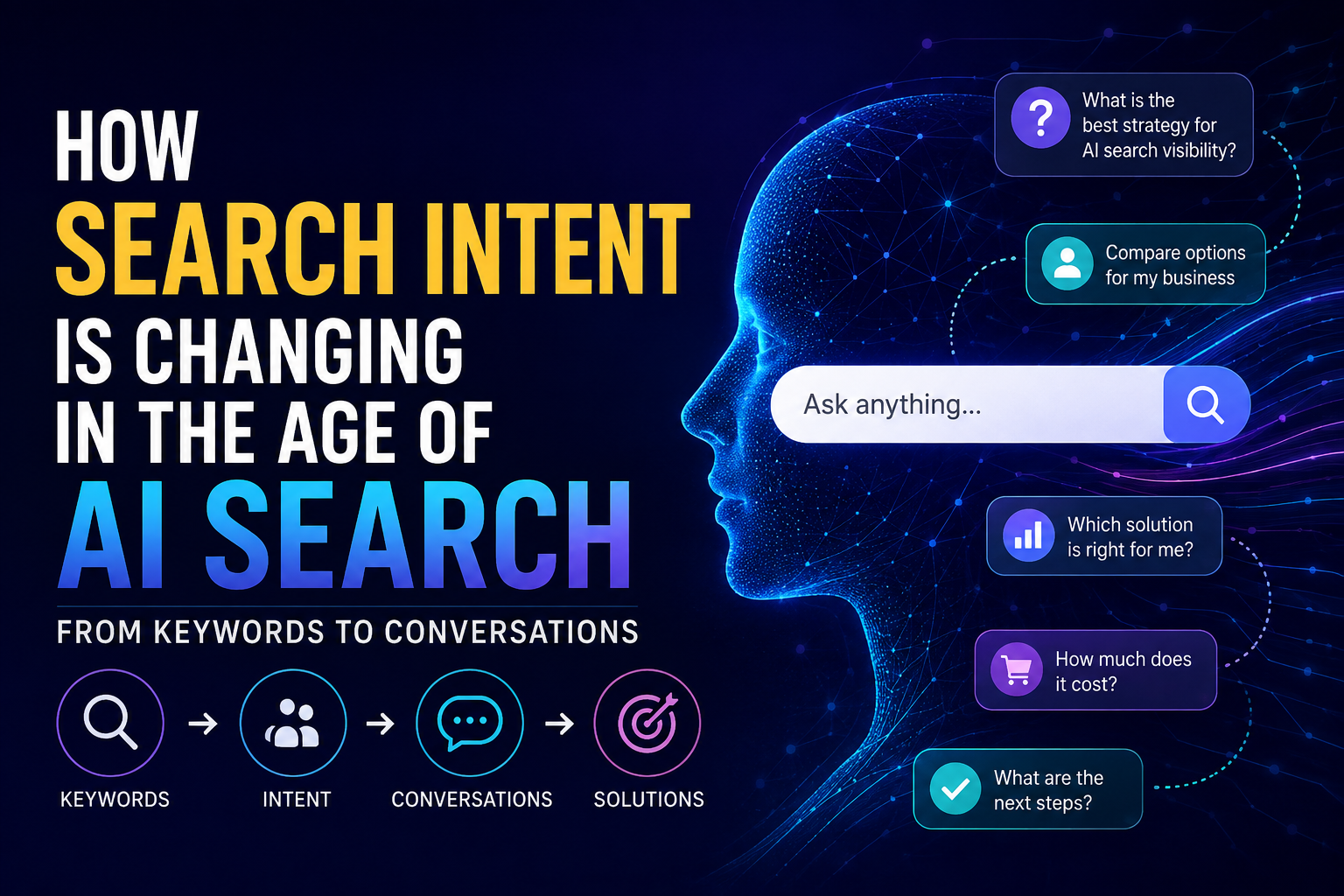
Understanding and optimizing for search intent is perhaps the most critical element of semantic content marketing. Every search query carries an underlying intent: informational (seeking knowledge), navigational (looking for a specific site), transactional (ready to purchase), or commercial investigation (comparing options before buying). But within these broad categories, intent exists on a spectrum of specificity and depth.
Semantic keywords—also sometimes referred to as thematically related terms or latent semantic indexing (LSI) keywords—are words and phrases that are conceptually related to your primary topic. They aren’t synonyms necessarily; they’re the natural vocabulary that would appear in a genuinely comprehensive discussion of your subject. If your primary topic is “sustainable architecture,” semantic keywords might include green building materials, LEED certification, passive solar design, carbon footprint reduction, urban heat islands, biophilic design, and net-zero energy buildings.
Incorporating these terms isn’t about keyword stuffing or hitting a magic density number. It’s about writing so thoroughly and naturally on a topic that the full vocabulary of that domain emerges organically in your content. Tools and semantic analysis platforms can help identify these related terms, but the best approach is to genuinely understand your subject matter and write comprehensively.
4. Content Comprehensiveness and Topical Depth
Google’s quality raters and algorithms increasingly evaluate content comprehensiveness. A 500-word blog post that barely scratches the surface of a complex topic is unlikely to compete with a 3,000-word deep dive that addresses every angle, answers every related question, and provides genuine insight. This doesn’t mean every piece of content needs to be a novel-length epic. It means that your content strategy as a whole needs to demonstrate topical depth.
This is where content silos and content taxonomy come into play. A well-organized content taxonomy ensures that your website covers a subject area systematically. You identify all the subtopics, questions, and related concepts within your niche, and you create dedicated, high-quality content for each one. Your information architecture—how content is categorized, tagged, and linked—should reflect the logical relationships between these topics.
When Google crawls a site with strong topical depth, it sees a pattern of expertise. The site doesn’t just have one article about a topic; it has a library. This pattern is a powerful ranking signal because it aligns with what Google wants: to direct users to sources that can fully satisfy their informational needs, not just match their exact search phrase.
5. Natural Language Understanding and Context-Aware Content
With the advancement of natural language understanding capabilities in search algorithms, the way you write matters as much as what you write about. Search engines can now parse sentence structure, identify subject-verb relationships, detect sentiment, and understand context at a paragraph and document level. This means your content needs to be genuinely well-written, not just optimized.
Context-aware content anticipates what a reader needs to know next. If you’re explaining a complex concept, you define technical terms. If you’re discussing a methodology, you explain why it matters and how it fits into the bigger picture. You use clear headings, logical flow, and natural transitions. You answer follow-up questions before the reader thinks to ask them. This approach doesn’t just satisfy readers; it sends strong semantic relevance signals to search engines that your content is authoritative and complete.
Building Your Semantic Content Strategy: A Step-by-Step Framework
Understanding the theory of semantic content marketing is important, but implementation is where results happen. Here’s a practical framework for building a semantic content strategy from the ground up.
Step 1: Define Your Core Topics and Entity Space
Start by identifying the broad topic areas where you want to establish authority. These should align with your business offerings, audience needs, and competitive positioning. For each core topic, map out the entity space: What are the key concepts, people, organizations, tools, methodologies, and related subjects? What does Google’s Knowledge Graph likely know about this topic, and how does your brand fit into that map?
This mapping exercise helps you see your content niche as an ecosystem rather than a list of keywords. It reveals natural content relationships and helps you identify gaps where competitors may have weak coverage.
Step 2: Conduct Semantic Keyword Research
Traditional keyword research focuses on volume and difficulty. Semantic keyword research focuses on meaning and relationships. Use a combination of tools and manual research to build a semantic keyword map for each core topic.
Start with your seed terms and use tools to identify related questions, prepositions, comparisons, and related entities. Look at “People Also Ask” boxes, related searches at the bottom of Google results, and the topics that appear in featured snippets. Analyze the top-ranking content for your target topics not just for the keywords they use, but for the breadth of subtopics they cover. What questions do they answer? What related concepts do they discuss? What entities do they reference?
Group your findings into thematic clusters. Instead of a spreadsheet with isolated keywords, create a visual map showing how terms relate to one another, which cluster they belong to, and what type of content would best serve each group. This becomes your content blueprint.
Step 3: Design Your Content Architecture
With your semantic map in hand, design your information architecture. Identify your pillar pages—the broad, authoritative pieces that will serve as the hub for each topic cluster. Then outline the cluster content that will support each pillar. Consider different content formats: long-form guides, how-to articles, comparison pieces, glossary entries, case studies, FAQ pages, and tool reviews.
Pay attention to internal linking strategy. Every piece of cluster content should link to its pillar page using descriptive, natural anchor text. Pillar pages should link to all relevant cluster content. Where appropriate, cluster pieces should link to one another if they share a direct semantic relationship. This web of internal links creates a clear content topology that search engines can easily crawl and understand.
Step 4: Create Comprehensive, Expert-Level Content
This is where many semantic content strategies succeed or fail. You can have the perfect architecture and keyword map, but if your content is thin, generic, or obviously written for search engines rather than humans, it won’t perform.
Each piece of content should aim to be the best resource on that specific subtopic on the internet. That means original research, unique insights, expert quotes, real examples, and genuinely helpful information. Cover the topic from multiple angles. Address common misconceptions. Include data and statistics. Use original images, charts, or diagrams where they add value.
As you write, incorporate your semantic keywords and related entities naturally. Don’t force them. If you’ve done your research and you genuinely understand the topic, the right vocabulary will emerge organically. Read your content aloud. If it sounds natural and authoritative, it’s probably well-optimized semantically. If it sounds like a robot strung keywords together, revise.
Step 5: Implement Technical Semantic Signals
On-page optimization in a semantic strategy goes beyond title tags and meta descriptions—though those still matter. Implement schema markup relevant to your content type. Article schema, FAQ schema, HowTo schema, and Organization schema all help search engines parse and categorize your content more effectively.
Use clear HTML heading hierarchies (H1, H2, H3, H4) that reflect the logical structure of your content. Include tables of contents for long articles. Use bullet points and numbered lists where appropriate. These structural elements don’t just help readers; they help search engines understand the relationships between different sections of your content.
Consider implementing semantic markup like RDFa or JSON-LD to explicitly define entities mentioned in your content. While this is more advanced, it can give you an edge in competitive niches by making your content machine-readable in ways that plain HTML cannot.
Step 6: Optimize for E-E-A-T
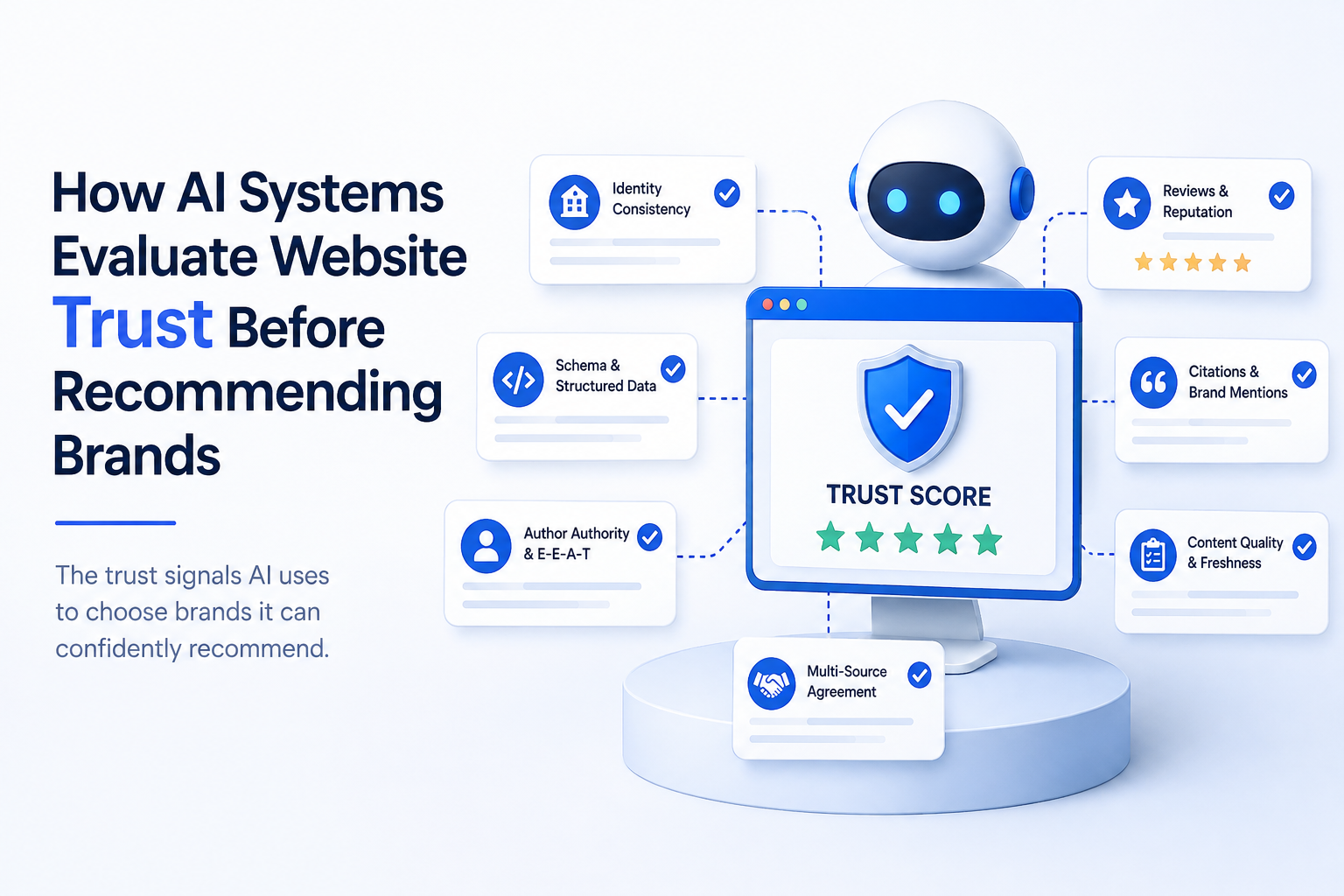
Google’s quality guidelines emphasize E-E-A-T: Experience, Expertise, Authoritativeness, and Trustworthiness. In a semantic content strategy, E-E-A-T isn’t an afterthought—it’s built into every piece of content.
Demonstrate experience by including case studies, personal examples, and original data. Show expertise by citing authoritative sources, linking to research, and clearly attributing content to knowledgeable authors. Build authoritativeness through comprehensive topical coverage, quality backlinks, and brand mentions across the web. Establish trustworthiness with clear about pages, transparent sourcing, accurate information, and secure website infrastructure.
Every element of E-E-A-T reinforces your semantic signals. A site that demonstrates genuine expertise in a topic area is, by definition, producing semantically rich, contextually aware content.
Advanced Semantic Content Tactics
Once you’ve established the foundation of your semantic content strategy, several advanced tactics can accelerate your results and deepen your competitive moat.
Semantic Content Refresh and Expansion
Search is dynamic. New entities emerge, terminology evolves, and user expectations change. A semantic content strategy requires ongoing maintenance. Regularly audit your existing content to identify opportunities for semantic expansion. Can you add new sections that address recently popular related topics? Are there new entities or tools in your industry that should be referenced? Have search patterns shifted in ways that require you to address new angles?
Content refresh isn’t just about updating dates and fixing broken links. It’s about ensuring your content ecosystem remains the most comprehensive and current resource in your niche. A quarterly semantic audit of your top-performing pages can yield significant ranking improvements.
Multilingual and Cross-Lingual Semantic Optimization
If you operate in multiple languages or markets, semantic content marketing principles apply across linguistic boundaries. However, direct translation often fails because entities, relationships, and search behaviors differ across languages and cultures. A concept that is closely related in English might have a different relationship in Spanish or Japanese.
Cross-lingual semantic optimization involves researching how topics and entities are understood in each target language and market, then building localized topic clusters rather than translated ones. This ensures your semantic signals are strong in every language you target.
Voice Search and Conversational Semantic Optimization
Voice search continues to grow, and it operates on pure semantic principles. Voice queries are longer, more conversational, and more question-based than typed searches. Optimizing for voice means creating content that directly answers specific questions, uses natural conversational language, and appears in featured snippets or “position zero” results.
FAQ pages, concise definitional paragraphs, and structured HowTo content are particularly effective for voice search optimization. These formats align perfectly with semantic search’s emphasis on direct answers and clear entity relationships.
Leveraging AI and Semantic Analysis Tools
The same AI technologies that power Google’s search algorithms can power your content strategy. Modern semantic analysis tools can evaluate your content’s topical completeness, compare it against top-ranking competitors, identify missing entities and related concepts, and even suggest structural improvements.
While these tools are powerful, they should complement human expertise, not replace it. The best semantic content comes from genuine subject matter experts who understand the nuances and relationships within their field. Use AI tools to scale your research and identify opportunities, but rely on human expertise to create content that truly resonates.
Measuring Success in Semantic Content Marketing
Traditional SEO metrics—rankings, traffic, backlinks—still matter, but a semantic strategy requires a broader measurement framework.
Topical coverage metrics track how comprehensively you’ve covered your target subject areas. What percentage of identified subtopics have dedicated content? How well are your topic clusters interconnected? Tools that map your content against competitor coverage can reveal gaps and opportunities.
Semantic relevance metrics evaluate how well your content aligns with the entity and concept landscape of your niche. Are you ranking for a broad array of related terms, not just your primary targets? Is your content appearing for “People Also Ask” questions and related searches? Broad, diverse ranking profiles indicate strong semantic authority.
User engagement metrics reflect whether your content actually satisfies intent. Time on page, scroll depth, bounce rate, and return visitor rates all indicate whether users find your content valuable. High engagement signals to search engines that your content is genuinely helpful, reinforcing your semantic authority.
Conversion metrics connect semantic authority to business outcomes. Are visitors who enter through your topic cluster content converting at higher rates? Is your comprehensive coverage building brand trust that translates into leads, sales, or other desired actions?
The Future of Semantic Content Marketing
The trajectory of search is clear: algorithms will continue to get better at understanding meaning, context, and genuine expertise. The BERT algorithm and its successors will become more sophisticated. Natural language processing will enable even more nuanced interpretation of content quality. The Knowledge Graph will expand to encompass more entities and relationships.
For content marketers, this means the window for gaming the system with keyword manipulation continues to close. The path to sustainable organic success runs through genuine expertise, comprehensive topical coverage, and content that serves real human needs. Semantic content marketing isn’t just an SEO tactic—it’s a content philosophy that aligns your digital presence with how search actually works today and how it will work tomorrow.
Brands that invest in building deep, interconnected content libraries will enjoy compounding returns. Every new piece of cluster content strengthens the semantic signals of its pillar page. Every updated article reinforces your topical authority. Over time, this creates a moat that thin, keyword-targeted content cannot cross.
Conclusion
The evolution from keyword-centric to semantic content marketing represents one of the most significant shifts in digital marketing history. It demands more from content creators: deeper research, genuine expertise, strategic architecture, and a commitment to comprehensive value. But it also offers more in return. Semantic content strategies build durable competitive advantages. They create content ecosystems that rank not just for individual keywords, but for entire topic areas. They establish brands as undeniable authorities in their niches.
If you’re still approaching content creation with a keyword list and a word count target, it’s time to evolve. Start mapping your entity space. Build your topic clusters. Create content that demonstrates true topical depth and semantic relevance. Optimize for search intent at every level. Implement structured data and schema markup to make your meaning machine-readable. And above all, commit to being genuinely helpful to your audience.
The search engines of today and tomorrow don’t just read words—they understand meaning. Your content strategy should do the same. Embrace semantic content marketing, and you’ll build not just better rankings, but a better brand. In a digital landscape increasingly dominated by AI, algorithms, and ever-smarter search, meaning is the ultimate competitive advantage. Make sure your content is rich with it.
Ready to transform your content strategy? Start by auditing your existing content through a semantic lens. Identify your core topics, map your clusters, and begin building the comprehensive, authoritative content ecosystem your audience—and the search engines—are looking for.
Let TanShub Digital develop a semantic content marketing strategy that helps your business rank higher, build topical authority, and increase qualified leads.




1 Comment
hi