Search engine optimization has evolved far beyond stuffing pages with exact-match keywords. Modern search engines understand context, relationships, user intent, and entities, making Semantic SEO an essential strategy for businesses that want sustainable organic visibility.
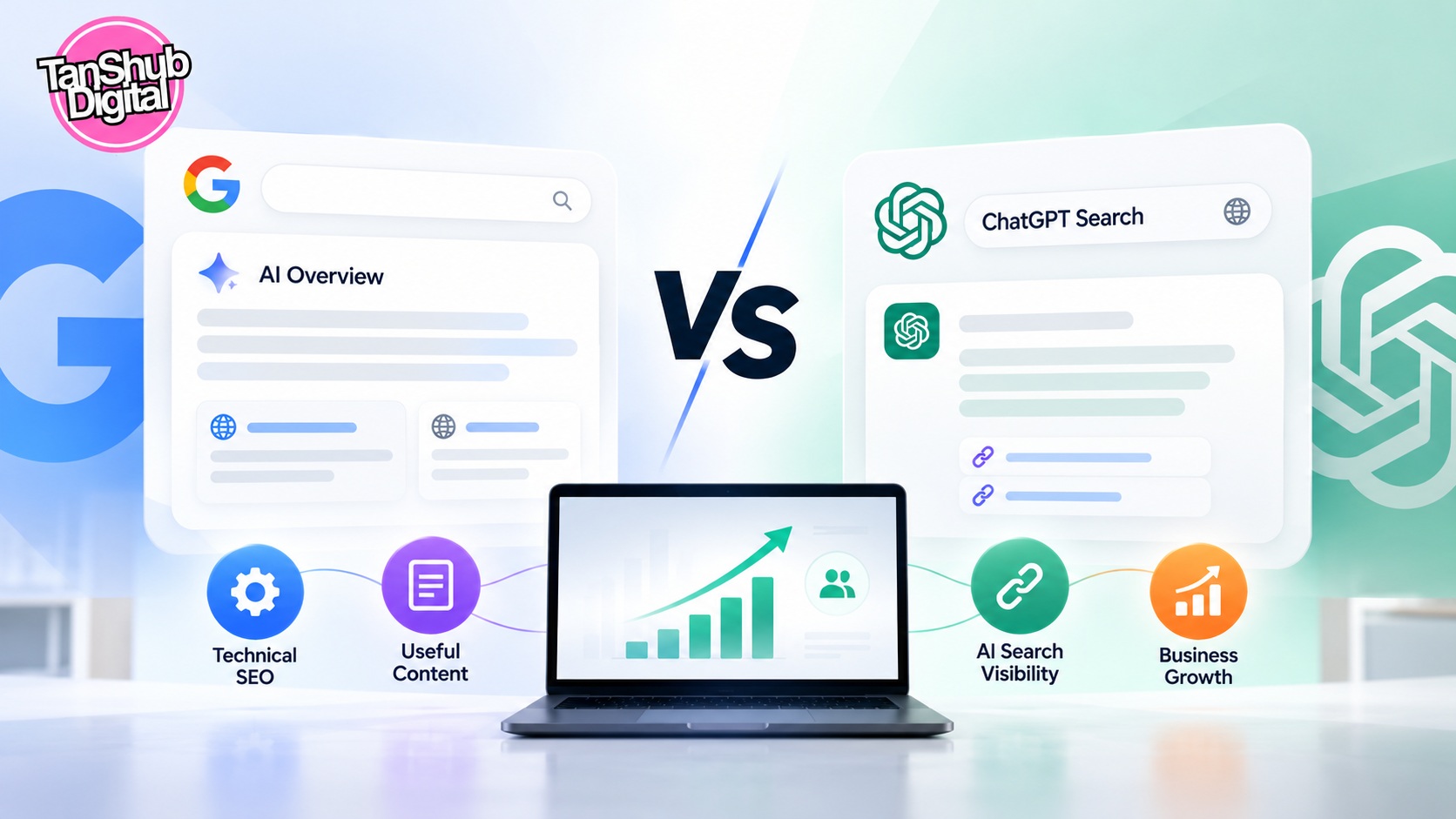
Google’s algorithms, powered by natural language processing and artificial intelligence, aim to understand the meaning behind every search rather than simply matching keywords. At the same time, AI-powered search platforms like ChatGPT, Gemini, Perplexity, and Microsoft’s Copilot retrieve and summarize information based on topical authority and semantic relevance instead of keyword density alone.
This shift has transformed how content should be created. Businesses that continue relying on outdated SEO tactics risk losing visibility, while those embracing Semantic SEO can improve rankings, increase organic traffic, and become trusted information sources across both traditional search engines and AI-powered platforms.
This comprehensive guide explains Semantic SEO, how it works, why it matters, and how you can implement it effectively.
What Is Semantic SEO?
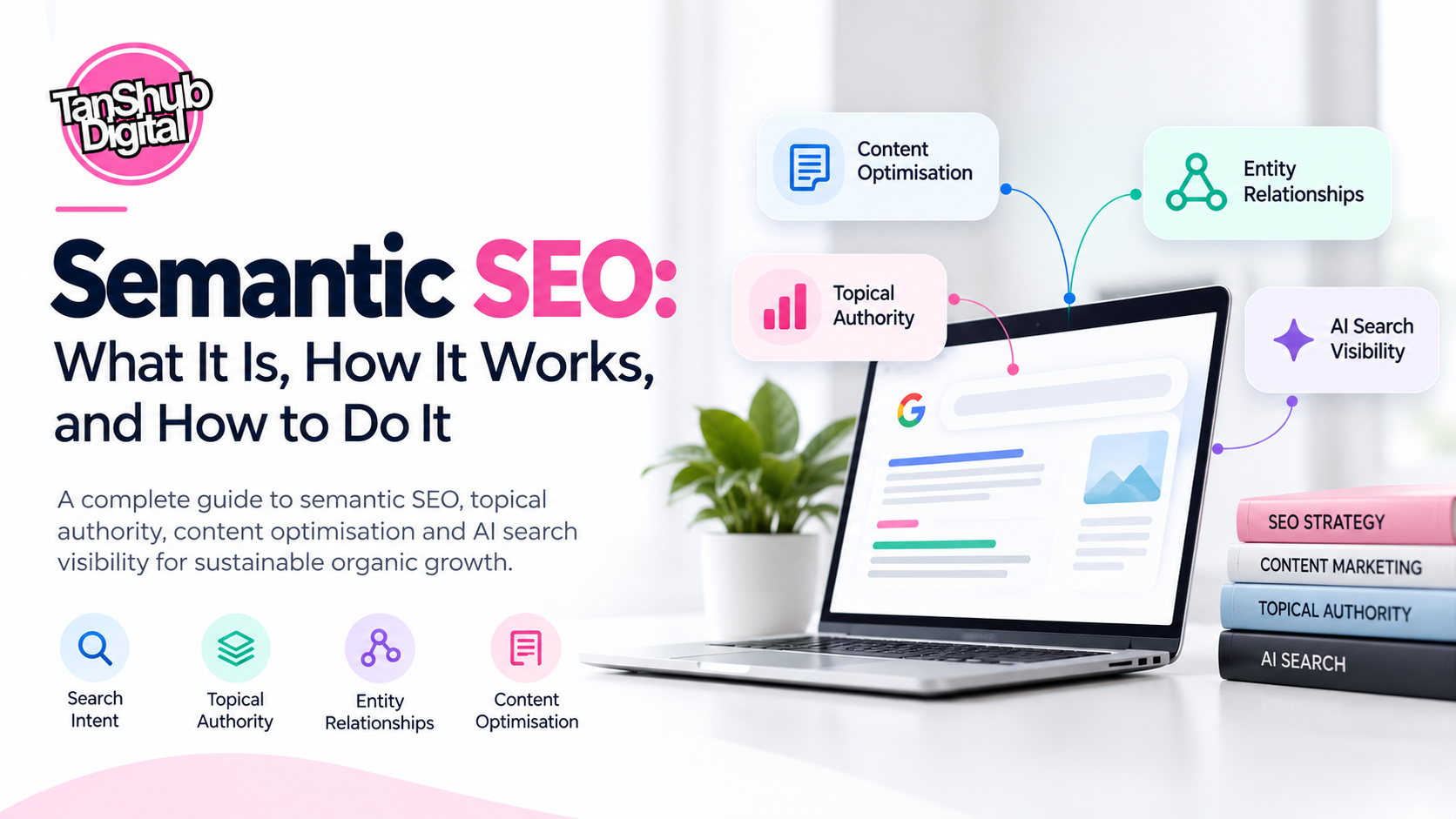
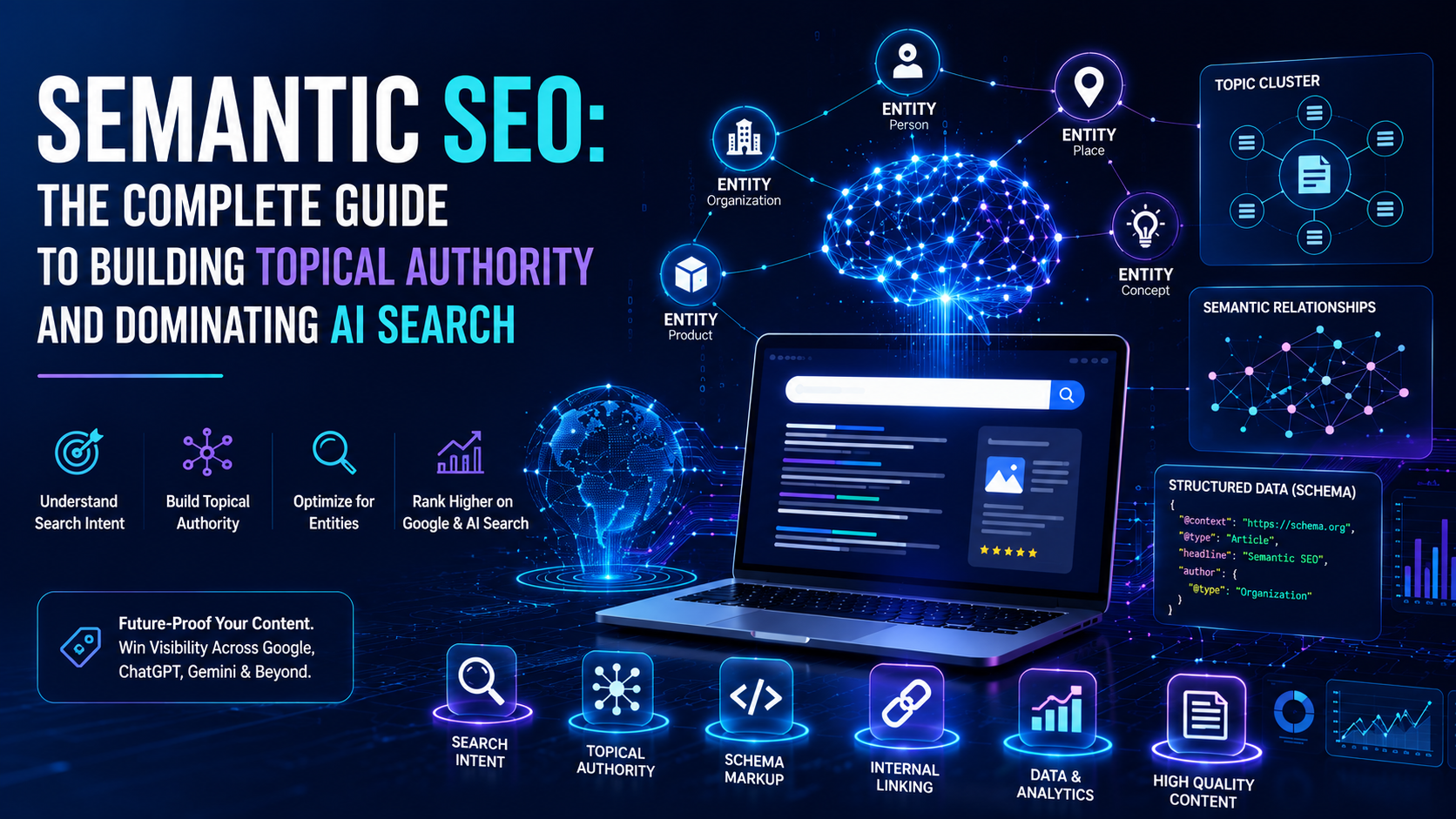
Semantic SEO is the process of optimizing content around topics, entities, relationships, and user intent instead of focusing only on individual keywords.
Rather than creating isolated pages targeting single keywords, Semantic SEO builds comprehensive content that thoroughly answers user questions while establishing topical authority.
For example, a traditional SEO strategy may create separate pages targeting:
- Semantic SEO
- Semantic Search
- Entity SEO
- Topical Authority
A Semantic SEO strategy combines these related concepts into a structured content ecosystem where each page supports the others through logical relationships and internal links.
The goal is not simply to rank for one keyword but to become an authoritative resource for an entire topic.
Why Semantic SEO Matters
Search engines have become increasingly sophisticated.
Google’s Knowledge Graph, BERT, MUM, and AI-powered Search Experience analyze context rather than isolated words. Instead of asking, “Does this page contain the keyword?” Google asks:
- Does this page fully answer the question?
- Does it cover related concepts?
- Is it written by an authoritative source?
- Does it satisfy user intent?
- Is it connected to other trustworthy content?
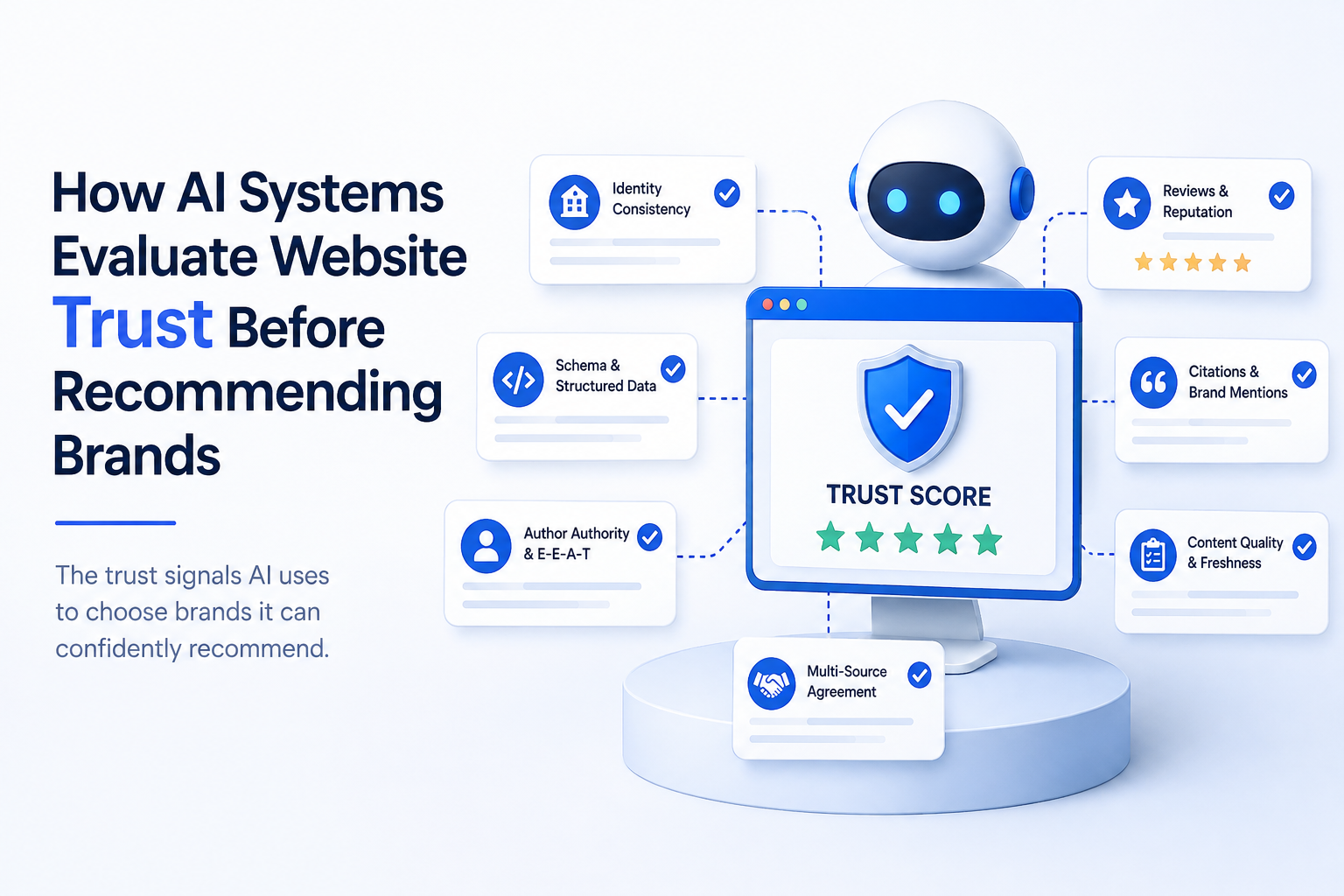
AI search platforms evaluate content similarly. They prioritize pages that demonstrate expertise, comprehensive topic coverage, and semantic relationships.
Businesses adopting Semantic SEO benefit from:
- Higher rankings
- Better keyword coverage
- Increased topical authority
- More featured snippets
- Improved AI visibility
- Higher organic traffic
- Better user engagement
- Increased trust and credibility
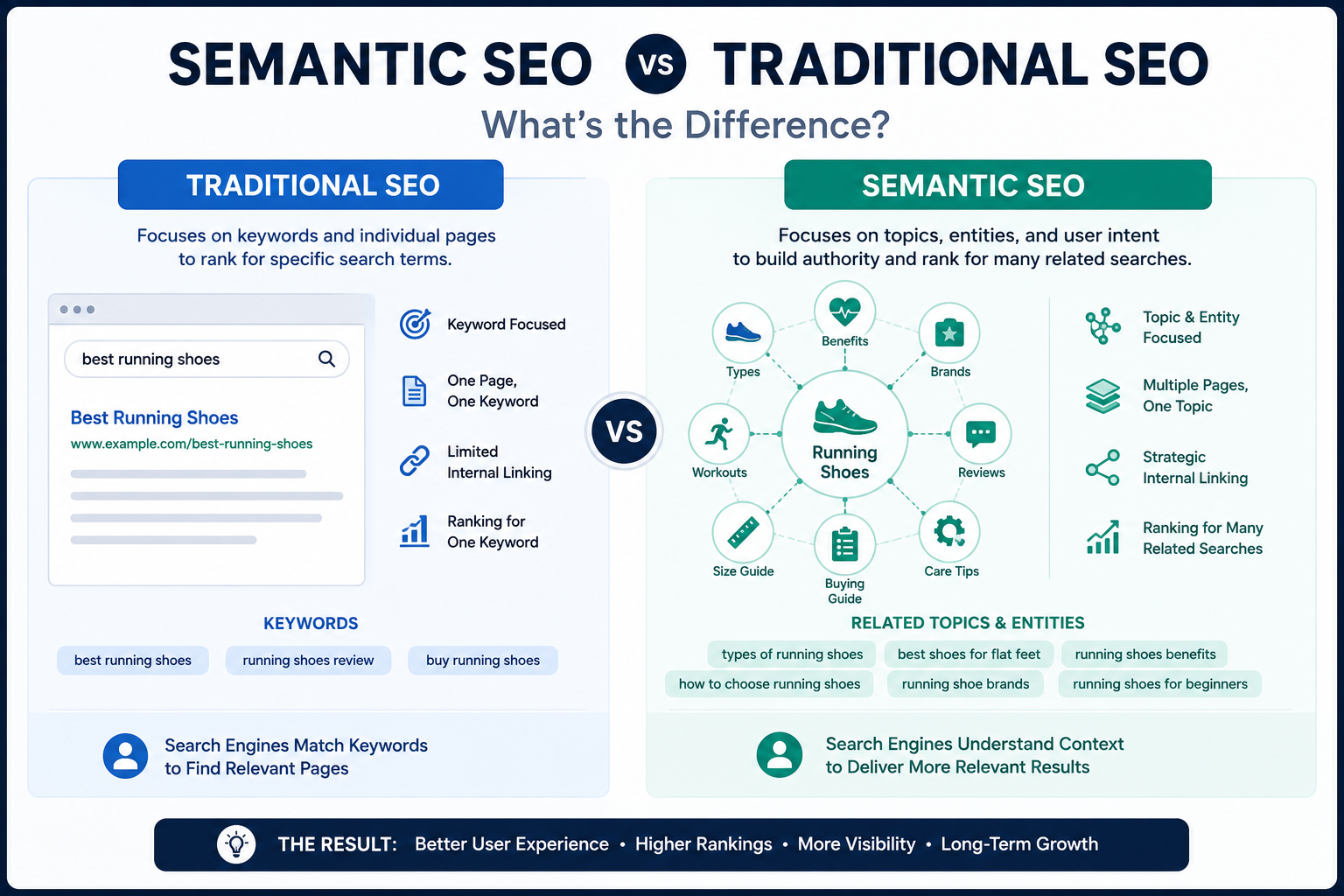
Semantic SEO vs Traditional SEO
| Traditional SEO | Semantic SEO |
|---|---|
| Focuses on keywords | Focuses on topics |
| Optimizes individual pages | Builds content ecosystems |
| Keyword density matters | Context matters |
| One keyword per page | Multiple related concepts |
| Exact-match optimization | Entity optimization |
| Limited internal linking | Strategic topic clusters |
| Search engine focused | User intent focused |
Traditional SEO still has value, but Semantic SEO builds upon it by considering how search engines understand language.
How Search Engines Understand Meaning
Modern search engines use artificial intelligence and natural language processing to understand the relationships between words and concepts.
Instead of treating “Apple” as just a word, Google identifies whether it refers to:
- Apple Inc.
- The fruit
- A music label
- A location
This understanding comes from entities and context.
When someone searches for “best laptops for content creators,” Google connects related concepts such as:
- RAM
- CPU
- SSD
- Adobe Creative Cloud
- Video editing
- Graphic design
Even if these exact phrases aren’t repeated throughout the content, semantic relationships help search engines understand relevance.
Understanding Entities
Entities are people, organizations, places, products, events, or concepts that search engines recognize independently of keywords.
Examples include:
- Microsoft
- Hyderabad
- Artificial Intelligence
- ChatGPT
- Search Engine Optimization
Instead of repeatedly using “Semantic SEO,” an optimized article naturally includes related entities such as:
- Knowledge Graph
- Search Intent
- Structured Data
- NLP
- Topic Clusters
- Schema Markup
- Internal Linking
- E-E-A-T
This helps search engines understand the depth and context of your content.
Search Intent: The Foundation of Semantic SEO
Every search has an underlying intent.
The four primary types are:
Informational
Users want knowledge.
Example:
“What is Semantic SEO?”
Navigational
Users want a specific website.
Example:
“Google Search Console”
Commercial
Users compare solutions.
Example:
“Best Semantic SEO tools”
Transactional
Users are ready to buy.
Example:
“Hire Semantic SEO agency”
Optimizing content around the correct intent significantly improves rankings because Google prioritizes pages that satisfy user expectations.
Building Topical Authority
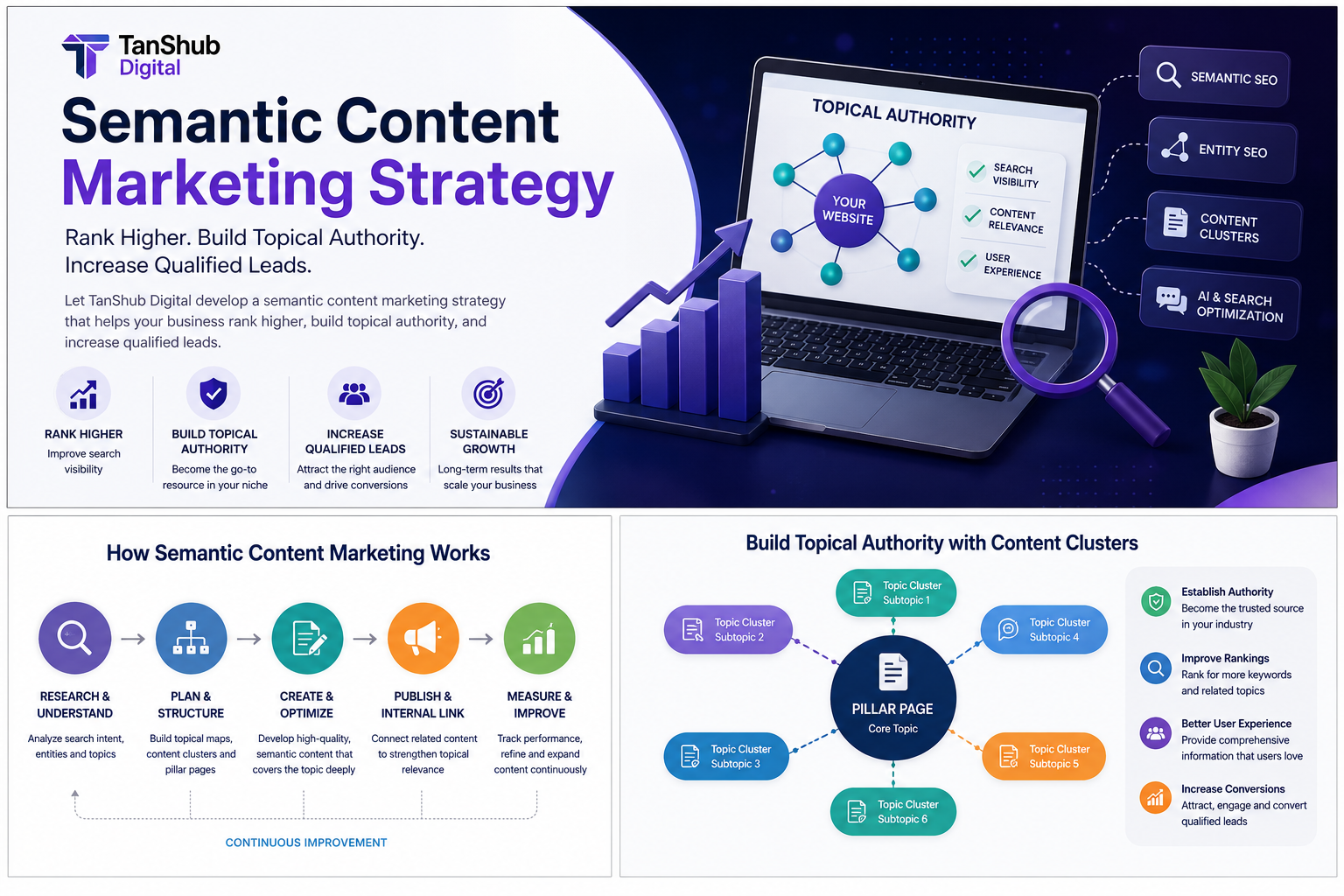
Topical authority means becoming a trusted source on a subject by consistently publishing comprehensive, interconnected content.
Instead of writing dozens of unrelated blogs, create a structured content hub.
Example:
Pillar Page
Semantic SEO
Supporting Articles:
- Entity SEO
- Topic Clusters
- Search Intent
- Internal Linking
- Schema Markup
- Knowledge Graph
- Content Architecture
- AI Search Optimization
- E-E-A-T
- Semantic Keyword Research
Each supporting article links back to the main guide while also linking to related content.
This interconnected structure signals expertise to search engines.
Topic Clusters
Topic clusters organize related content around one central subject.
A pillar page provides a broad overview, while supporting pages explore individual concepts in depth.
Benefits include:
- Better crawlability
- Improved internal linking
- Higher authority
- Enhanced user experience
- Stronger semantic relationships
For example, if your pillar page covers Semantic SEO, supporting pages can address entity optimization, schema markup, search intent analysis, and AI search optimization.
Semantic Keyword Research
Keyword research now extends beyond identifying high-volume search terms.
A Semantic SEO strategy identifies:
- Primary keywords
- Secondary keywords
- Related entities
- User questions
- Long-tail variations
- Synonyms
- Industry terminology
Instead of optimizing for only “SEO agency,” include naturally related terms such as:
- Digital marketing agency
- Organic search
- Search visibility
- Website optimization
- AI search optimization
- Technical SEO
- Content marketing
- Semantic content
This creates comprehensive coverage without keyword stuffing.
Content Depth Matters
Thin articles rarely perform well.
A high-quality Semantic SEO article should answer every major question users may have.
Include:
- Definitions
- Examples
- Statistics
- Comparisons
- Case studies
- FAQs
- Practical tips
- Visual explanations
- Actionable checklists
The objective is to eliminate the need for users to return to search results.
Internal Linking Strategy
Internal linking strengthens semantic relationships across your website.
Every relevant page should connect to other related pages using descriptive anchor text.
For example:
Semantic SEO → Entity SEO
Entity SEO → Knowledge Graph
Knowledge Graph → Schema Markup
Schema Markup → Structured Data
Structured Data → AI Search Optimization
This creates a logical content network that helps both users and search engines navigate your site.
Schema Markup
Schema markup provides structured information that helps search engines interpret your content.
Important schema types include:
- Organization
- Article
- FAQ
- Breadcrumb
- Person
- Service
- Local Business
- Review
Proper implementation improves eligibility for rich results and enhances semantic understanding.
E-E-A-T and Semantic SEO
Google evaluates content using Experience, Expertise, Authoritativeness, and Trustworthiness.
To strengthen E-E-A-T:
- Publish original insights.
- Display author credentials.
- Cite credible sources.
- Update content regularly.
- Include real-world examples.
- Showcase testimonials and case studies.
- Maintain transparent contact information.
Strong E-E-A-T supports better visibility in competitive industries.
Semantic Content Writing Best Practices
When writing content:
Start with user intent instead of keywords.
Use natural language.
Answer related questions.
Include semantic variations.
Avoid unnecessary repetition.
Write comprehensive introductions.
Create descriptive headings.
Use bullet points where appropriate.
Add comparison tables.
Explain technical concepts clearly.
Maintain logical content flow.
Include actionable takeaways.
This improves readability while helping search engines understand the page’s subject.
Semantic SEO for AI Search
AI-powered search platforms retrieve information differently from traditional search engines.
Large Language Models analyze:
- Context
- Entity relationships
- Authority
- Structured information
- Content quality
- Consistency
- Citations
To improve AI visibility:
Create comprehensive resources.
Use clear heading structures.
Answer questions directly.
Implement structured data.
Publish original research.
Maintain topical clusters.
Update outdated content.
Build a strong internal linking architecture.
The more complete and authoritative your content becomes, the more likely it is to appear in AI-generated responses.
Common Semantic SEO Mistakes
Many websites still make avoidable mistakes.
These include:
- Keyword stuffing
- Publishing thin articles
- Ignoring search intent
- Weak internal linking
- Duplicate content
- Missing schema markup
- Poor content structure
- Covering topics superficially
- Publishing without topical planning
- Neglecting content updates
Avoiding these issues strengthens your site’s long-term performance.
Semantic SEO Checklist
Before publishing any content, verify that it includes:
✔ Clear search intent
✔ Comprehensive topic coverage
✔ Related entities
✔ Natural keyword usage
✔ Internal links
✔ External authoritative references
✔ Optimized headings
✔ Schema markup
✔ FAQs
✔ Mobile-friendly design
✔ Fast loading speed
✔ Optimized images
✔ Descriptive metadata
✔ Strong conclusion
✔ Clear call-to-action
Tools for Semantic SEO
Several tools simplify Semantic SEO implementation.
Popular options include:
- Google Search Console
- Google Trends
- Google Keyword Planner
- Semrush
- Ahrefs
- Screaming Frog
- Surfer SEO
- Frase
- Clearscope
- MarketMuse
- AlsoAsked
- AnswerThePublic
- ChatGPT
- Gemini
- Perplexity
Combining multiple tools provides deeper insights into search behavior and content opportunities.
The Future of Semantic SEO
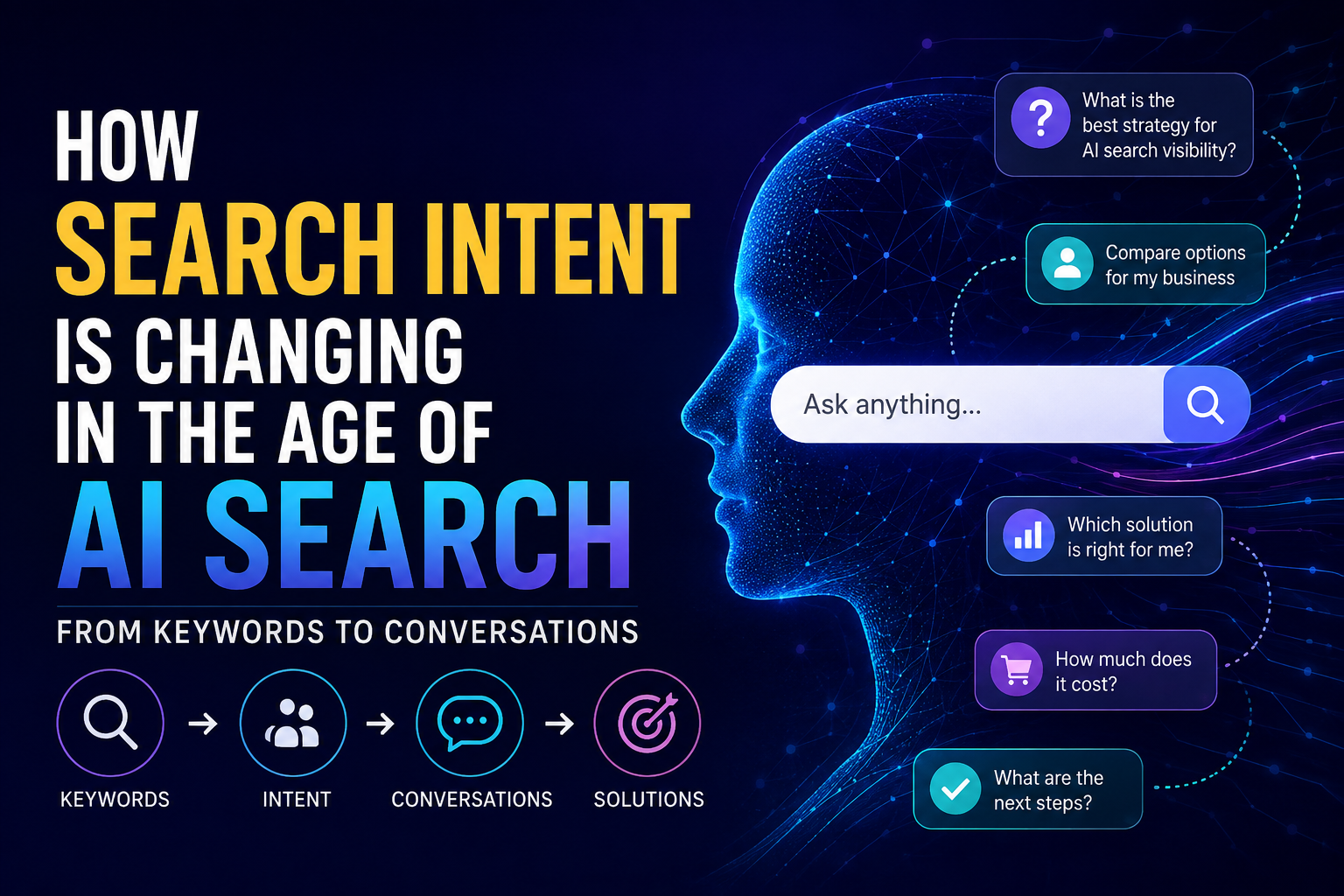
Search is becoming increasingly conversational.
Users now ask complete questions instead of typing isolated keywords.
AI-powered assistants provide summarized answers based on authoritative sources.
Future optimization will emphasize:
- Entity-based content
- Conversational search
- Multimodal search
- Voice search
- Personalized experiences
- AI-generated search results
- Knowledge graphs
- Structured data
- Original expertise
Businesses investing in Semantic SEO today will be better positioned for tomorrow’s search landscape.
Frequently Asked Questions
Is Semantic SEO replacing traditional SEO?
No. Semantic SEO builds upon traditional SEO by adding context, entities, and user intent to conventional optimization practices.
Does Semantic SEO improve Google rankings?
Yes. Comprehensive, semantically relevant content often performs better because it satisfies user intent and demonstrates topical authority.
Is Semantic SEO important for AI search?
Absolutely. AI platforms rely heavily on semantic relationships, structured information, and authoritative content when generating responses.
How long does Semantic SEO take to show results?
Results vary depending on competition, website authority, and content quality. Most websites begin seeing measurable improvements within three to six months when supported by consistent publishing and technical SEO.
Is schema markup required?
While not mandatory, schema markup significantly improves search engines’ understanding of your content and increases eligibility for enhanced search results.
Conclusion
Semantic SEO is no longer an optional enhancement to traditional optimization. It has become the foundation of modern search visibility. As search engines and AI platforms continue evolving, success depends on understanding topics rather than simply targeting keywords.
Businesses that publish comprehensive, interconnected, user-focused content supported by structured data, strong internal linking, and topical authority will consistently outperform competitors relying on outdated keyword-centric tactics.
The future belongs to websites that answer questions thoroughly, demonstrate expertise, and organize information in ways that both humans and machines can easily understand. By embracing Semantic SEO today, you position your brand not only for higher rankings on Google but also for greater visibility across AI-driven search experiences that are reshaping how people discover information online.
Whether you are building a new website or improving an existing one, adopting Semantic SEO will help create lasting authority, improve organic performance, and establish your business as a trusted resource in your industry.
Ready to strengthen your search visibility? TanShub Digital helps businesses implement Semantic SEO strategies, build topical authority, and optimize content for Google, ChatGPT, Gemini, and other AI-powered search platforms. Contact us to create a future-ready SEO strategy that delivers sustainable growth.